
Have you noticed your baby struggling to feed, or experienced clicking sounds during nursing? Are you an adult dealing with persistent speech tightness, jaw discomfort, or a gap between your front teeth that won’t stay closed?
These common issues are often caused by a restricted band of tissue inside the mouth—a condition known as tongue-tie or lip-tie.
At general dental practices across Sydney, awareness around oral tissue restrictions (frenums) has grown significantly. Modern general dentistry now offers comfortable, minimally invasive laser frenectomy solutions designed to restore proper function and mobility for patients of all ages.
What is a Tongue-Tie or Lip-Tie?
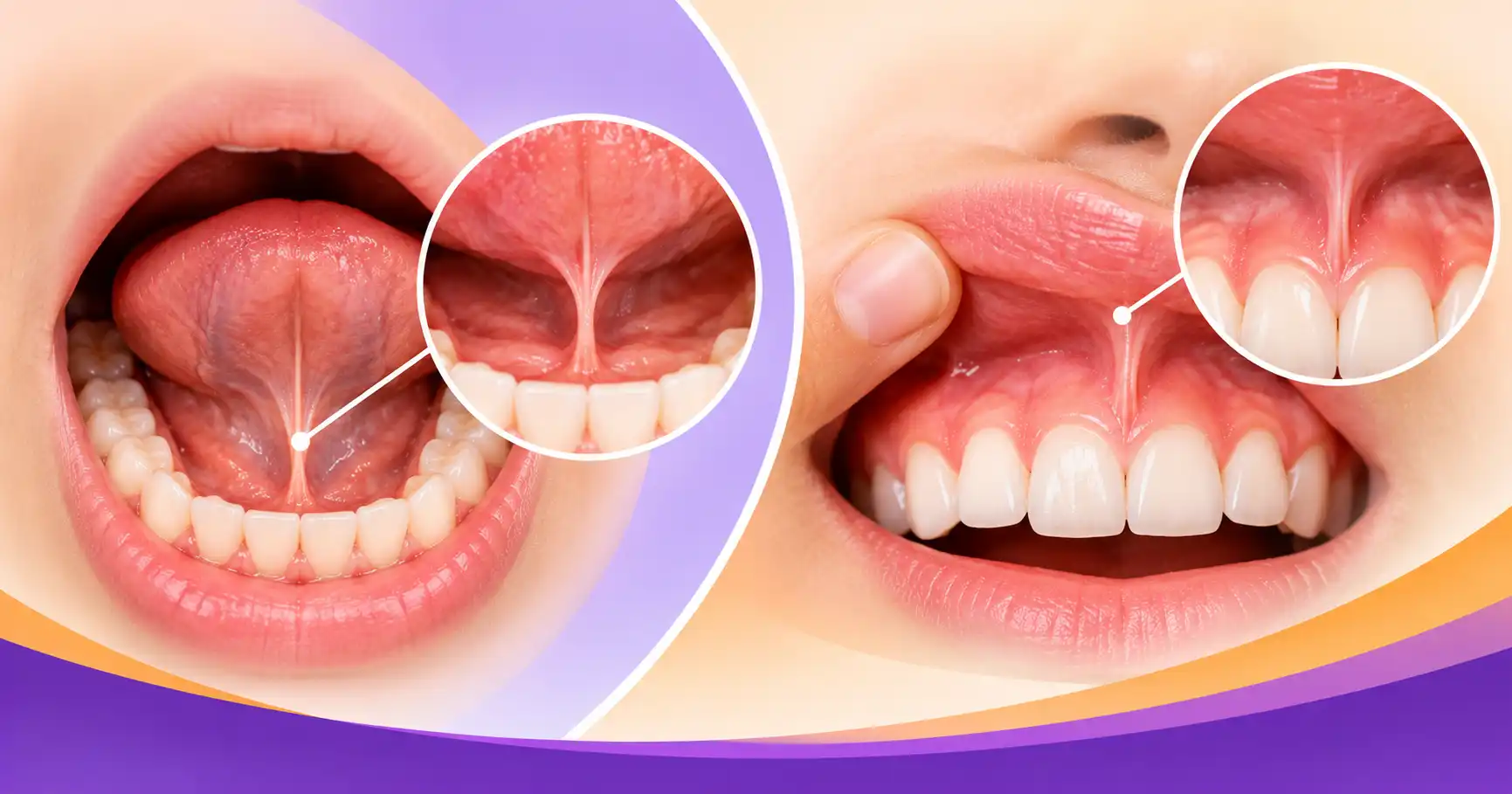
Inside every human mouth are small folds of tissue called frenums (or frenulums) that connect the lips, cheeks, and tongue to the surrounding oral structures:
- Lingual Frenum: The band connecting the underside of the tongue to the floor of the mouth. When this band is unusually short, thick, or tight, it restricts tongue elevation and movement—a condition called ankyloglossia or tongue-tie.
- Labial Frenum: The band attaching the upper or lower lip to the gum tissue above the front teeth. A tight attachment is commonly referred to as a lip-tie.
When a frenum limits natural movement, it can affect feeding, speech development, oral hygiene, and orthodontic alignment.
Common Symptoms Across Different Age Groups
Tongue-tie and lip-tie manifestations vary depending on developmental stages.
1. Infants & Breastfeeding Mothers
In newborns and infants, restricted tongue mobility can hinder the ability to form a deep latch:
- For Babies: Clicking sounds while feeding, slipping off the breast/bottle, swallowing excess air (leading to colic or reflux-like symptoms), slow weight gain, or prolonged feeding times.
- For Mothers: Severe nipple pain, flattened or damaged nipples, blocked milk ducts, and low milk supply caused by inefficient expression.
2. Children & Teenagers
As children grow, untreated oral ties may contribute to:
- Speech Difficulties: Challenges articulating specific sounds that require tongue tip elevation (e.g., t, d, l, n, r, th).
- Orthodontic Issues: A prominent gap (diastema) between the upper front teeth caused by a low-attaching labial frenum.
- Oral Hygiene Challenges: Difficulty sweeping food debris from teeth with the tongue, increasing decay risk.
3. Adults
Many adults in Sydney only discover they have a tongue-tie later in life. Symptoms include:
- Chronic muscle tension in the jaw, neck, or floor of the mouth.
- Speech fatigue during extended speaking periods.
- Localised gum recession where a high frenum attachment pulls directly on the gumline.
What is a Frenectomy Procedure?
A frenectomy is a quick, minor procedure performed to release or reshape the restrictive tissue band.
- Lingual Frenectomy: Releasing the tissue under the tongue to improve range of motion.
- Labial Frenectomy: Releasing the upper lip attachment to reduce tension on the gums and allow front teeth to come together.
Modern Laser Frenectomy vs. Traditional Surgery
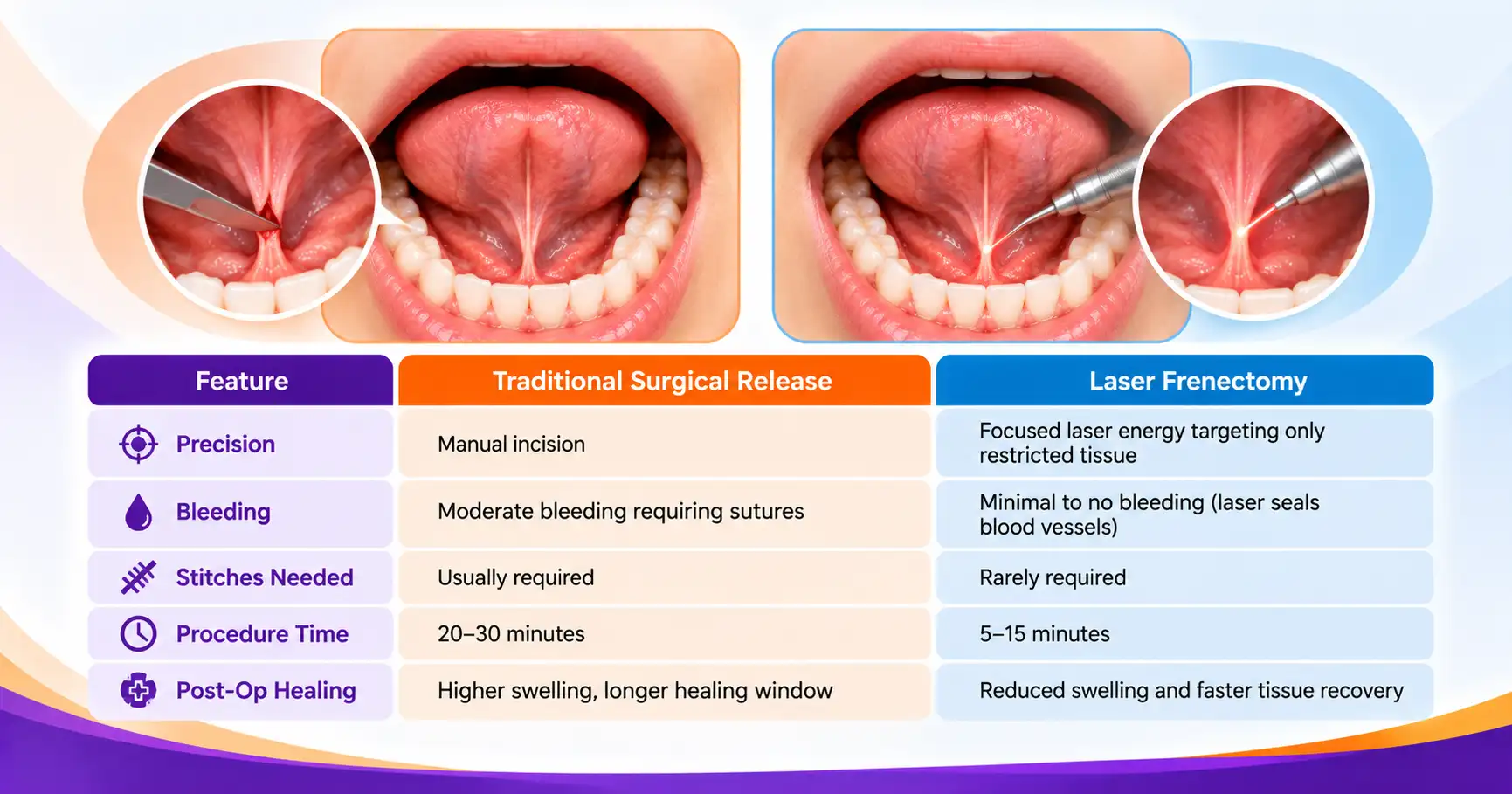
While traditional frenectomies were performed using scalpel incisions and sutures, modern general dental practices in Sydney frequently utilise dental lasers:
| Feature | Traditional Surgical Release | Laser Frenectomy |
|---|---|---|
| Precision | Manual incision | Focused laser energy targeting restricted tissue |
| Bleeding | Moderate bleeding requiring sutures | Minimal to no bleeding, as the laser seals blood vessels |
| Stitches Needed | Usually required | Rarely required |
| Procedure Time | 20–30 minutes | 5–15 minutes |
| Post-Op Healing | Potentially more swelling and a longer healing period | May involve less swelling and faster tissue recovery |
What to Expect During Assessment and Treatment
- Comprehensive Evaluation: A detailed visual and functional assessment is conducted to determine whether the frenum restriction is causing functional issues. For infants, consultation alongside a International Board Certified Lactation Consultant (IBCLC) or speech pathologist is recommended.

- The Procedure: Local anaesthetic is applied to ensure complete comfort. Using dental laser technology, the dentist precisely releases the tight tissue band in just a few minutes.
- Aftercare & Stretching Exercises: Post-procedure care involves simple gentle stretches to prevent the tissue from reattaching during the healing process.
Frequently Asked Questions (FAQ)
Is a laser frenectomy painful?
Local anaesthesia is applied prior to treatment, ensuring the procedure itself is pain-free. Afterwards, mild soreness or tightness may be felt for a few days, which is typically managed with over-the-counter pain relief.
How much does a frenectomy cost in Australia?
The cost of a frenectomy in Australia varies based on case complexity, whether it is a lip or tongue release, and the technology used. Generally, minor frenectomies range from $400 to $1,200. Private health insurance with Major Dental cover may provide a rebate depending on your policy.
Can a tongue-tie reattach after surgery?
The oral mucosa heals rapidly. If prescribed post-operative stretches are not performed regularly, partial tissue reattachment can occur. Following aftercare guidelines minimises this risk.
Seeking Guidance on Oral Tissue Restrictions?
If you suspect that you or your child may be affected by a tongue-tie or lip-tie, schedule an assessment with a qualified general dentist in Sydney. Early evaluation ensures informed choices for optimal oral function, comfort, and long-term health.