
Tooth decay, also known as cavities or caries, is one of the most common dental problems people face at any age. It usually begins very small and may not cause any pain at first, which is why many people ignore it. However, if it is not treated early, it can grow deeper into the tooth and lead to serious problems like infection, severe pain, and even tooth loss.
Tooth decay happens when bacteria in your mouth produce acid that slowly damages the outer layer of your teeth. Over time, this damage creates tiny holes that can get bigger and more painful. The good news is that tooth decay is preventable and treatable if you take the right steps at the right time.
In this guide, you will learn everything in a simple and easy way—from what causes tooth decay, to its stages, symptoms, treatment options, and helpful tips to keep your teeth strong and healthy for a long time.
What Is Tooth Decay?
Tooth decay, also called cavities or caries, is a very common dental problem that can affect people of all ages. It usually starts small and painless, so many people don’t notice it at first. But if left untreated, it can spread deeper into the teeth and cause serious problems like pain, infection, or even tooth loss.
Tooth decay happens when bacteria in your mouth produce acid that slowly damages your teeth. This risk increases due to habits like:
- Eating too many sugary or sticky foods
- Not brushing and flossing properly
- Drinking sugary drinks often
- Skipping regular dental check-ups
Structure of a Tooth
Your tooth is made up of three main layers, and each one plays an important role in keeping your teeth strong and healthy:
- Enamel – This is the hard outer layer that protects your tooth from damage and decay. It is the strongest part of your tooth.
- Dentin – Located under the enamel, dentin is softer and more sensitive. Once decay reaches this layer, you may start feeling sensitivity or discomfort.
- Pulp – This is the innermost part of the tooth. It contains nerves and blood vessels, which is why damage here can cause severe pain.
Once tooth decay passes through the enamel, it can spread more quickly into the deeper layers, making the problem more serious and painful if not treated in time.
Stages of Tooth Decay
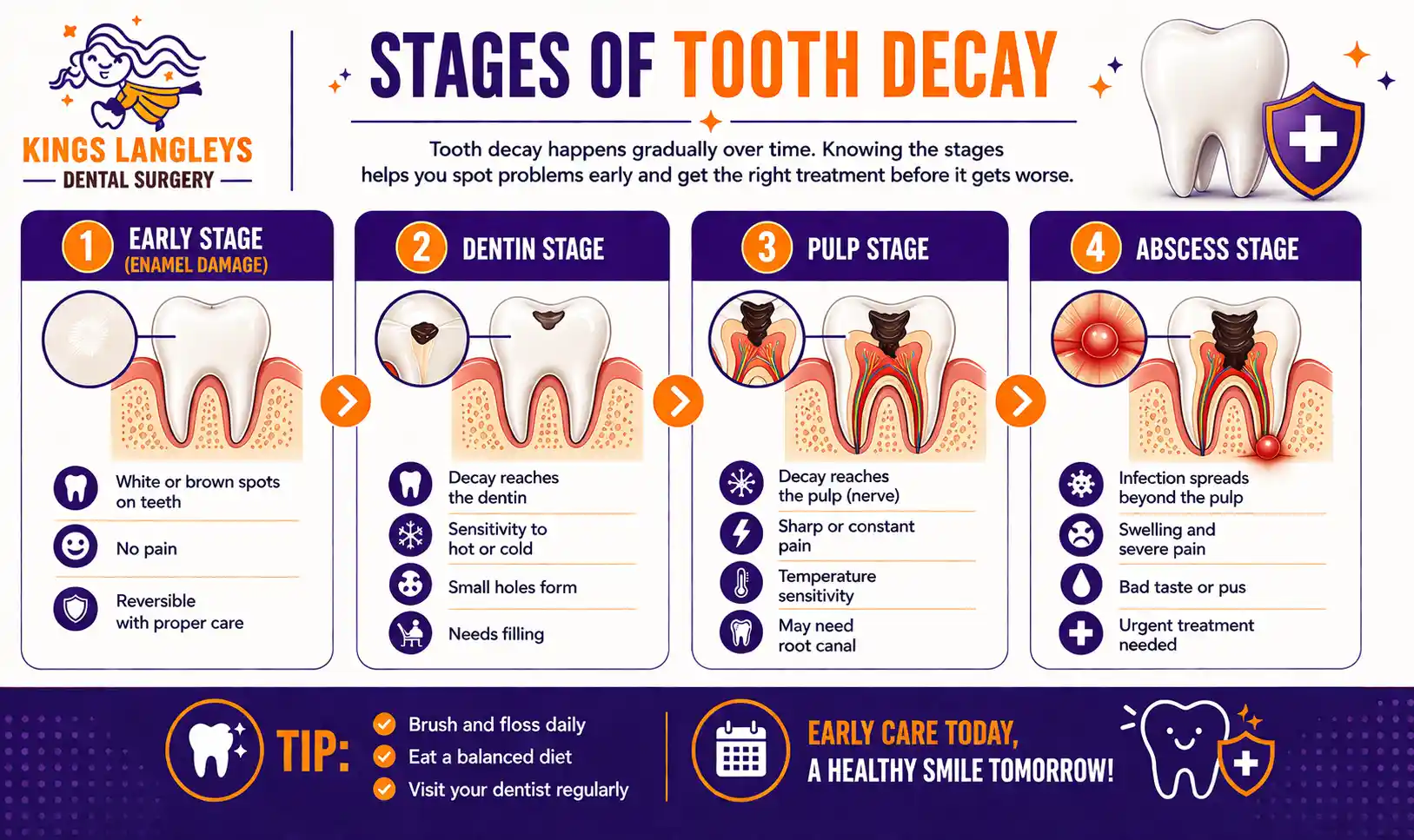
Tooth decay does not happen all at once—it develops gradually over time. Understanding the different stages can help you recognise the problem early and take action before it becomes serious. Each stage affects deeper layers of the tooth and may cause different symptoms. Here’s a breakdown of the stages:
1. Early Stage (Enamel Damage)
- Small white or light brown spots appear on the tooth surface.
- Usually, there is no pain or discomfort at this stage.
- This stage is reversible with proper oral hygiene, fluoride toothpaste, and regular dental check-ups.
2. Dentin Stage
- Decay moves past the enamel and reaches the softer dentin layer.
- You may notice sensitivity to cold, hot, or sweet foods.
- Small holes or pits may start to form in the tooth.
- Treatment at this stage often involves fillings to prevent further damage.
3. Pulp Stage
- Decay reaches the pulp, the innermost part of the tooth containing nerves and blood vessels.
- This can cause sharp, constant, or throbbing pain, especially while eating or at night.
- The tooth may also become more sensitive to temperature changes.
- At this stage, a root canal is often required to remove the infection and save the tooth.
4. Abscess Stage
- The infection spreads beyond the pulp, forming a painful abscess.
- Symptoms include swelling, pus, bad taste in the mouth, and severe pain.
- This stage requires urgent dental treatment to prevent the infection from spreading.
- In severe cases, the tooth may need to be extracted if it cannot be saved.
Common Symptoms of Cavities
You may notice:
- Toothache or sharp pain
- Sensitivity to hot, cold, or sweet foods
- Dark spots or visible holes in teeth
- Bad breath or bad taste
- Pain when biting or chewing
If you notice any of these, search for a dental clinic near me or visit a trusted provider for dental care in Kings Langley as soon as possible.
Treatment Options
The type of treatment you need depends on how severe the tooth decay is. Here’s a detailed look at the main options:
1. Filling
- Used for small cavities that haven’t reached the deeper layers of the tooth.
- The dentist removes the decayed part of the tooth and fills it with a material like composite or amalgam.
- Fillings restore the tooth’s shape and function and prevent further decay.
2. Dental Crown
- Needed when a tooth is weakened, cracked, or severely damaged.
- A crown acts like a protective cap that covers the entire tooth.
- Before placing a crown, the dentist will remove decay, rebuild the tooth if necessary, and shape it so the crown fits perfectly.
- Crowns are strong and help the tooth last many years.
3. Root Canal
- Required if decay has reached the nerve and pulp of the tooth.
- A root canal dentist in Kings Langley will:
- Remove the infected nerve and pulp
- Clean and disinfect the inside of the tooth
- Seal the tooth to prevent further infection
- After a root canal, a crown is usually placed to protect the tooth from breaking.
- This procedure saves a tooth that would otherwise need to be removed.
4. Extraction
- If the tooth is too damaged to repair, it may need to be removed.
- After extraction, your dentist can discuss replacement options such as dental implants, bridges, or partial dentures to restore your smile and chewing function.
Simple Tips to Prevent Tooth Decay
Here are easy and effective tips you can follow daily:
Daily Care Tips
- Brush your teeth twice a day using fluoride toothpaste
- Brush for at least 2 minutes
- Floss once daily to clean between teeth
- Rinse your mouth after meals
Food & Drink Tips
- Avoid too much sugar (candies, soda, sweets)
- Drink more water, especially after eating
- Eat healthy foods like fruits, vegetables, and dairy
- Limit sticky foods that stay on teeth
Smart Habits
- Do not skip brushing before bed
- Change your toothbrush every 3 months
- Avoid smoking or tobacco
- Chew sugar-free gum to increase saliva
Regular Dental Visits
- Visit a dental clinic every 6 months
- Get professional cleaning and check-ups
- Early problems can be treated quickly and cheaply
You can also consult a general dentist or local experts and doctors in Kings Langley for proper advice.
Quick Tips for Tooth Pain Relief
If you already have pain, here are some temporary solutions:
- Rinse with warm salt water
- Use a cold compress on your cheek
- Avoid very hot or cold foods
- Take pain relief medicine if needed (as advised)
These are temporary solutions. Always visit a dentist for proper tooth pain relief in Kings Langley.
Final Thoughts
Tooth decay may seem small at first, but it can become serious if ignored. The best way to protect your teeth is through good daily habits and regular check-ups.
By choosing proper dental care in Kings Langley or visiting a dental clinic near you, you can keep your smile healthy, strong, and pain-free for years to come.
Don’t wait for tooth pain to get worse—book your appointment today at Kings Langleys Dental Surgery and take the first step toward a healthier smile!