
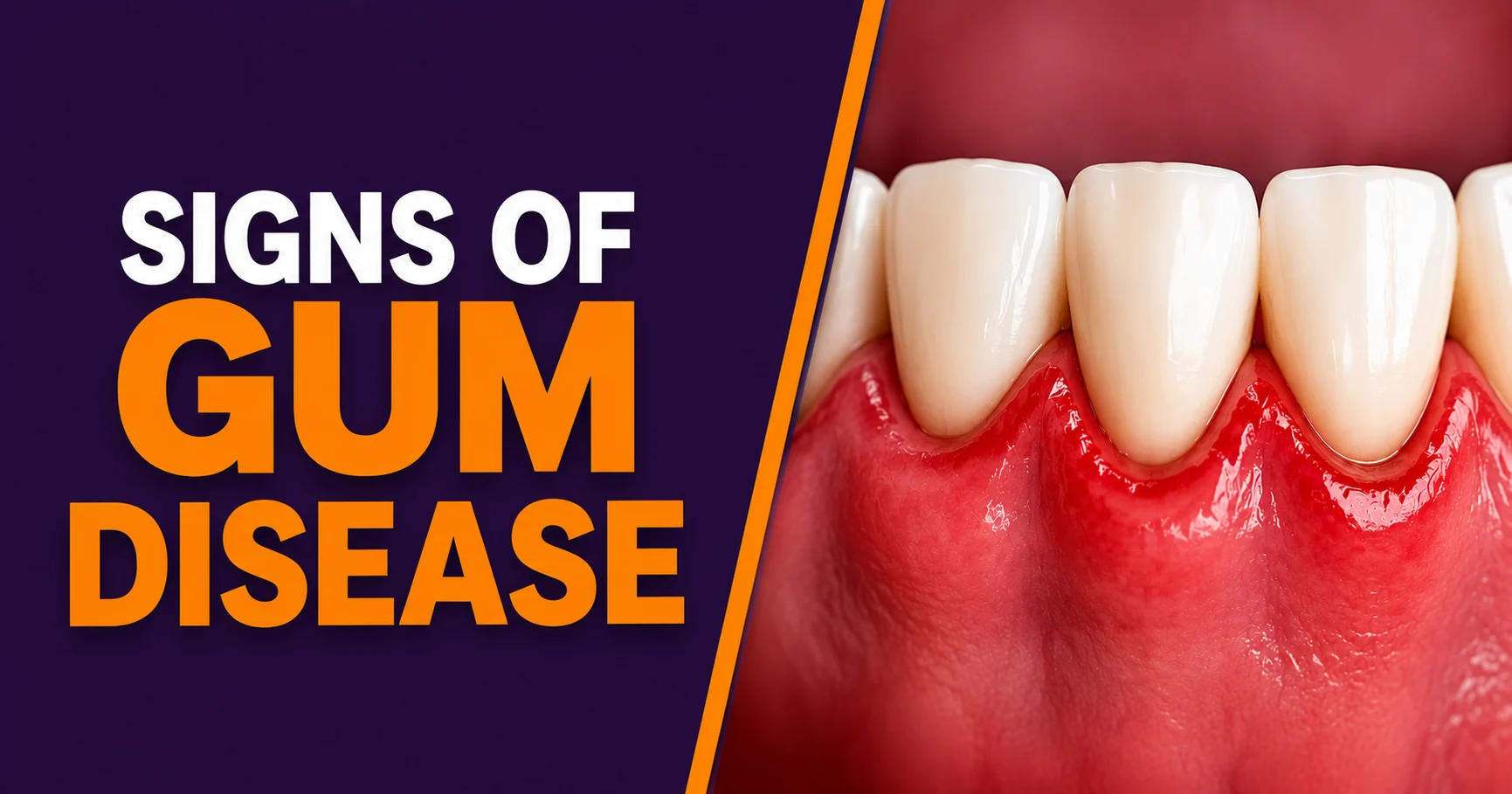
Gum disease is one of the most common dental problems. Many people have it without even knowing. It often starts small and gets worse slowly, which is why the early signs of gum disease are easy to miss until things turn serious.
Spot the signs of gum disease early and you can protect your teeth, your gums, and even your jawbone. Early treatment is also simpler, gentler, and cheaper. This guide walks through what gum disease is, the warning signs to watch for, what causes it, and how to protect your smile.
What Is Gum Disease?
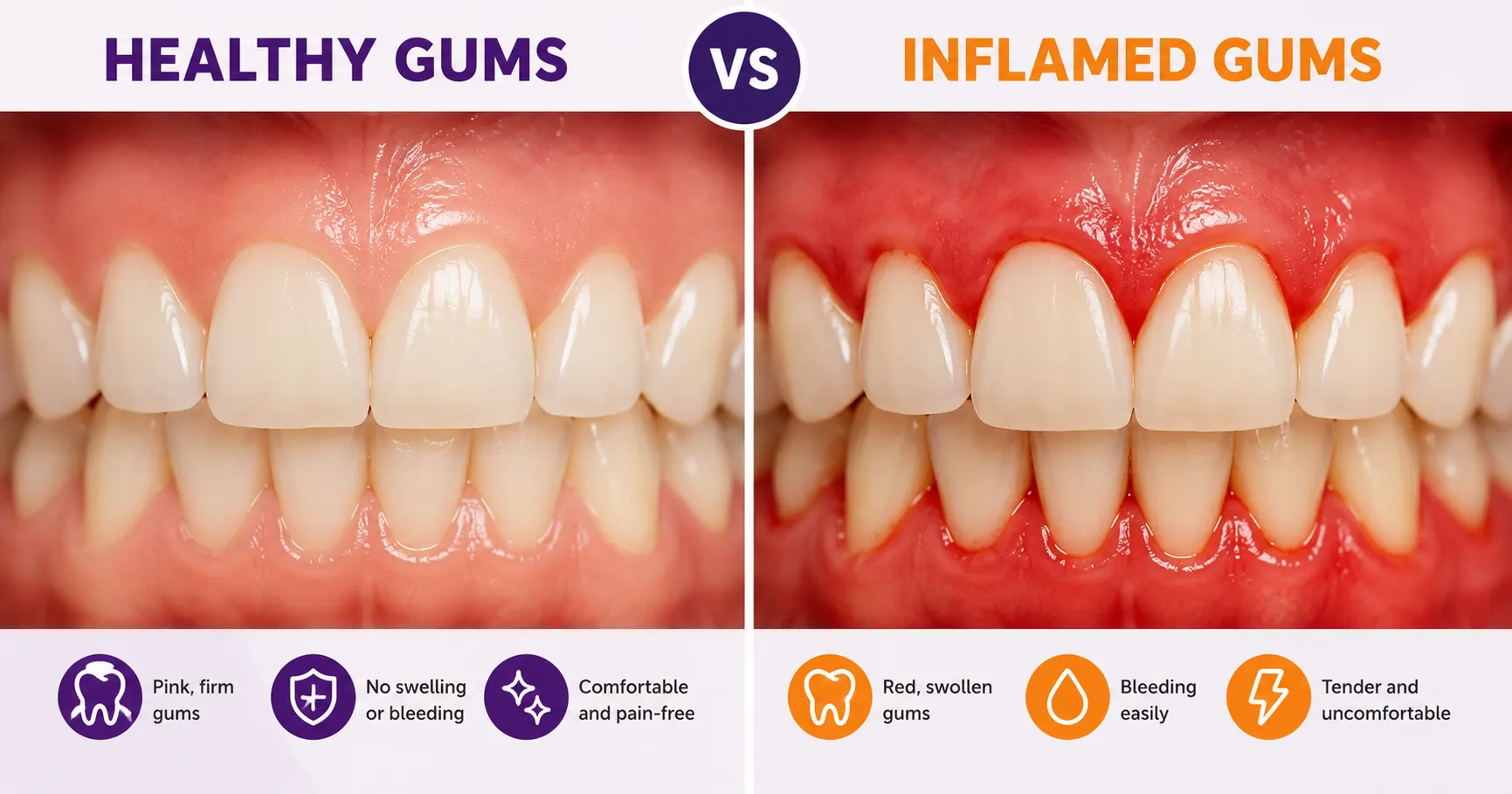
Gum disease is an infection of the gum tissue that holds your teeth in place. It usually starts with plaque, a sticky layer of bacteria that builds up on your teeth every day.
Skip brushing and flossing, and that plaque hardens into tartar (also called calculus). Brushing alone won’t shift tartar. It irritates the gums and lets bacteria spread, which can lead to infection. The gingivitis vs periodontitis difference explains how gum disease progresses.
| Stage | What Happens | Can It Be Reversed? |
|---|---|---|
| Gingivitis (Early) | Gums are red, swollen, or bleed easily. No bone damage has occurred. | Yes, with good oral hygiene and a professional dental clean. |
| Periodontitis (Advanced) | Infection spreads below the gum line, damaging the bone and fibres that support your teeth. | No, but it can be effectively managed and its progression slowed with treatment. |
Learn more about our gum disease treatment options.
What Causes Gum Disease?
Plaque bacteria cause most gum disease. Several other things raise your risk:
- Poor oral hygiene. Skipping brushing or flossing lets plaque turn into tartar.
- Smoking or vaping. Tobacco use is one of the biggest risk factors for gum disease.
- Genetics. Some people are more prone to gum problems, even with good habits.
- Hormonal changes. Pregnancy, puberty, and menopause can make gums more sensitive to plaque.
- Certain medications. Some reduce saliva flow, which normally helps protect the mouth.
- Chronic conditions. Diabetes can make gum disease more likely and harder to control.
- Poor nutrition. A diet low in nutrients weakens your immune system’s ability to fight infection.
- Stress. Ongoing stress affects your immune system and your ability to fight off gum infections.
Knowing your own risk factors helps you and your dentist decide how often you need check-ups and cleans.
Signs of Gum Disease You Shouldn’t Ignore
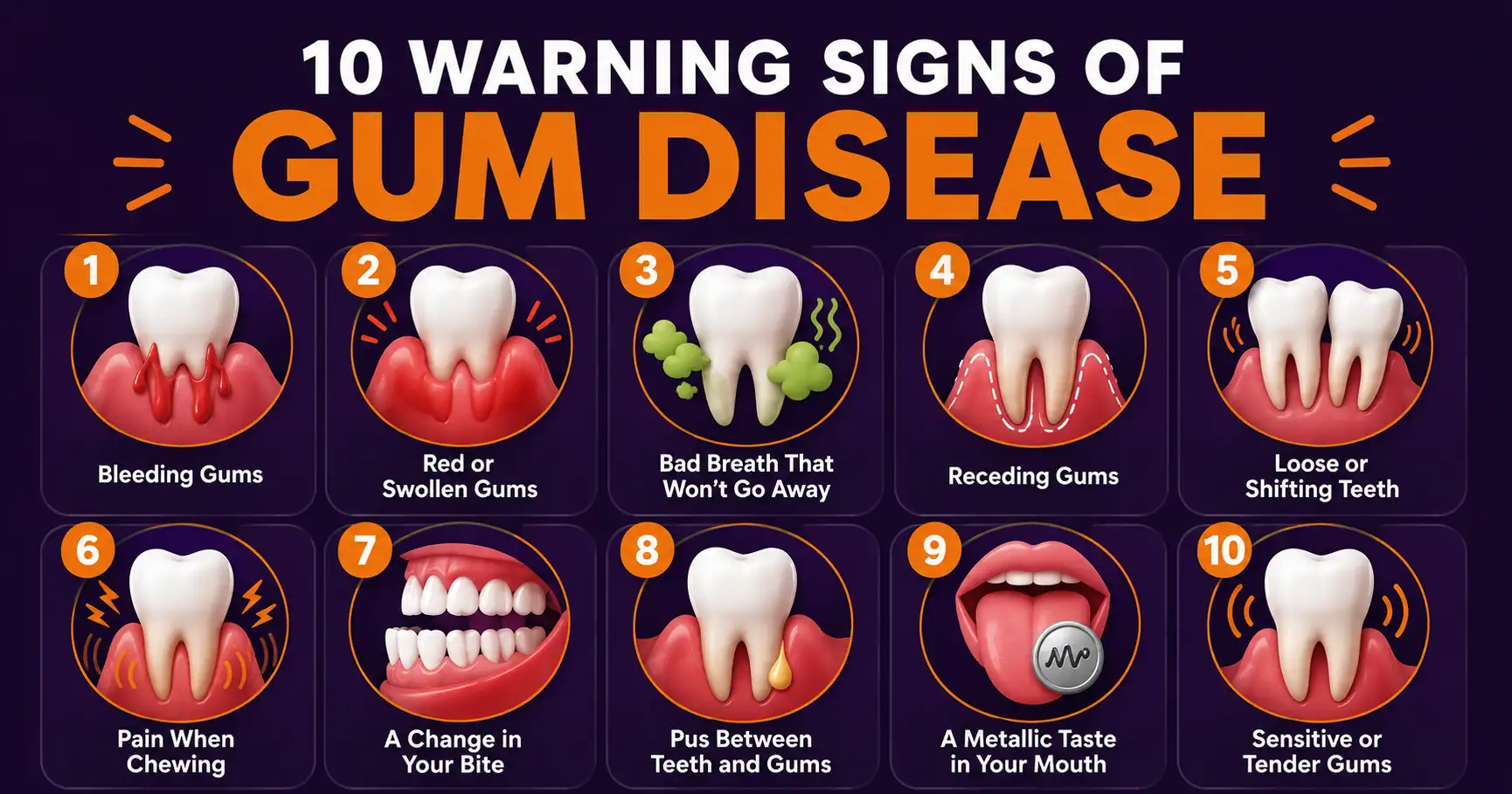
Gum disease is common and often painless in the early stages, so the visible signs carry the warning. The AIHW’s National Study of Adult Oral Health found around 30% of Australian adults aged 15 and over have moderate or severe periodontitis, up from 23% a decade earlier. Here’s what to watch for.
1. Bleeding Gums
This is often the first sign. Plaque along the gum line is the usual cause, so bleeding when you brush or floss isn’t normal, even if it’s minor or only happens now and then. Healthy gums don’t bleed during normal cleaning.
2. Red or Swollen Gums
Healthy gums are firm and pale pink. Red, puffy, or tender gum tissue is a warning that something’s wrong underneath the surface.
3. Bad Breath That Won’t Go Away
Bacteria under the gums release odours that cause a bad smell and a bad taste. This bad breath, known as halitosis, often sticks around even after brushing, flossing, or mouthwash.
4. Receding Gums
Gum recession happens when your gums pull away from your teeth, making them look longer than before. It can expose the tooth root, which is softer than the crown, and cause sensitivity to hot, cold, or sweet foods.
5. Loose or Shifting Teeth
As gum disease damages the bone and tissue around your teeth, they can start to feel loose or drift. You might notice new gaps forming where there weren’t any before.
6. Pain When Chewing
Gum disease can make chewing uncomfortable or even painful, especially in the later stages when it affects the tissue supporting your teeth.
7. A Change in Your Bite
If your teeth suddenly meet differently when you bite down, gum disease may be affecting the bone that supports them.
8. Pus Between Teeth and Gums
This is a clear sign of active infection and needs prompt attention from a dentist. It may look like a small pimple on the gum or show up as discharge when you press the gum.
9. A Metallic Taste in Your Mouth
Some people with gum disease notice an ongoing metallic or bad taste, caused by infection and bacteria beneath the gum line.
10. Sensitive or Tender Gums
Gums that feel sore or tender to the touch, especially around certain teeth, can be an early sign that inflammation is building up.
- Noticing one or more of these? Get it checked early. Kings Langleys Dental Surgery has looked after smiles in the area since 1977, and a quick gum check is part of every routine visit. Book an appointment and put your mind at rest.
Why Gum Disease Should Not Be Ignored
Left untreated, gum disease can lead to tooth loss. It’s a leading cause of missing teeth in adults, more common than tooth decay in many age groups. It can also destroy bone in the jaw that holds your teeth, which makes future treatment like a denture or dental implant more complex and costly.
Gum disease doesn’t stay in the mouth either. Research links it to heart disease, diabetes, and pregnancy complications. Healthdirect Australia notes that gum disease can range from mild inflammation to serious damage to the tissue and bone that support your teeth, so early treatment matters for your overall health, not just your smile.
The good news? Gum disease is largely preventable, and even advanced cases can usually be managed well with the right treatment plan.
How Is Gum Disease Diagnosed?
Your dentist checks for gum disease during a regular check-up. They will:
- Look at the colour, texture, and firmness of your gums
- Measure the small space between tooth and gum, called a periodontal pocket
- Check for bleeding when they gently measure that space
- Take X-rays to check the bone level around your teeth, if needed
The whole thing is quick, painless, and usually part of a standard check-up.
How Is Gum Disease Treated?
Treatment depends on how far the disease has progressed:
- Early stage (gingivitis). A professional clean plus better brushing and flossing at home can often reverse it within a few weeks.
- Moderate to advanced (periodontitis). A deep clean, called scaling and root planing, removes bacteria below the gum line and smooths the tooth root.
- Severe cases. Sometimes further treatment is needed to manage ongoing infection, reduce pocket depth, and protect the remaining bone and gum.
- Ongoing maintenance. Regular cleans and supportive care keep the disease under control long term, since periodontitis can’t be fully reversed.
Your dentist will check your gums and suggest a plan that suits your stage of gum disease and your overall health.
How to Prevent Gum Disease
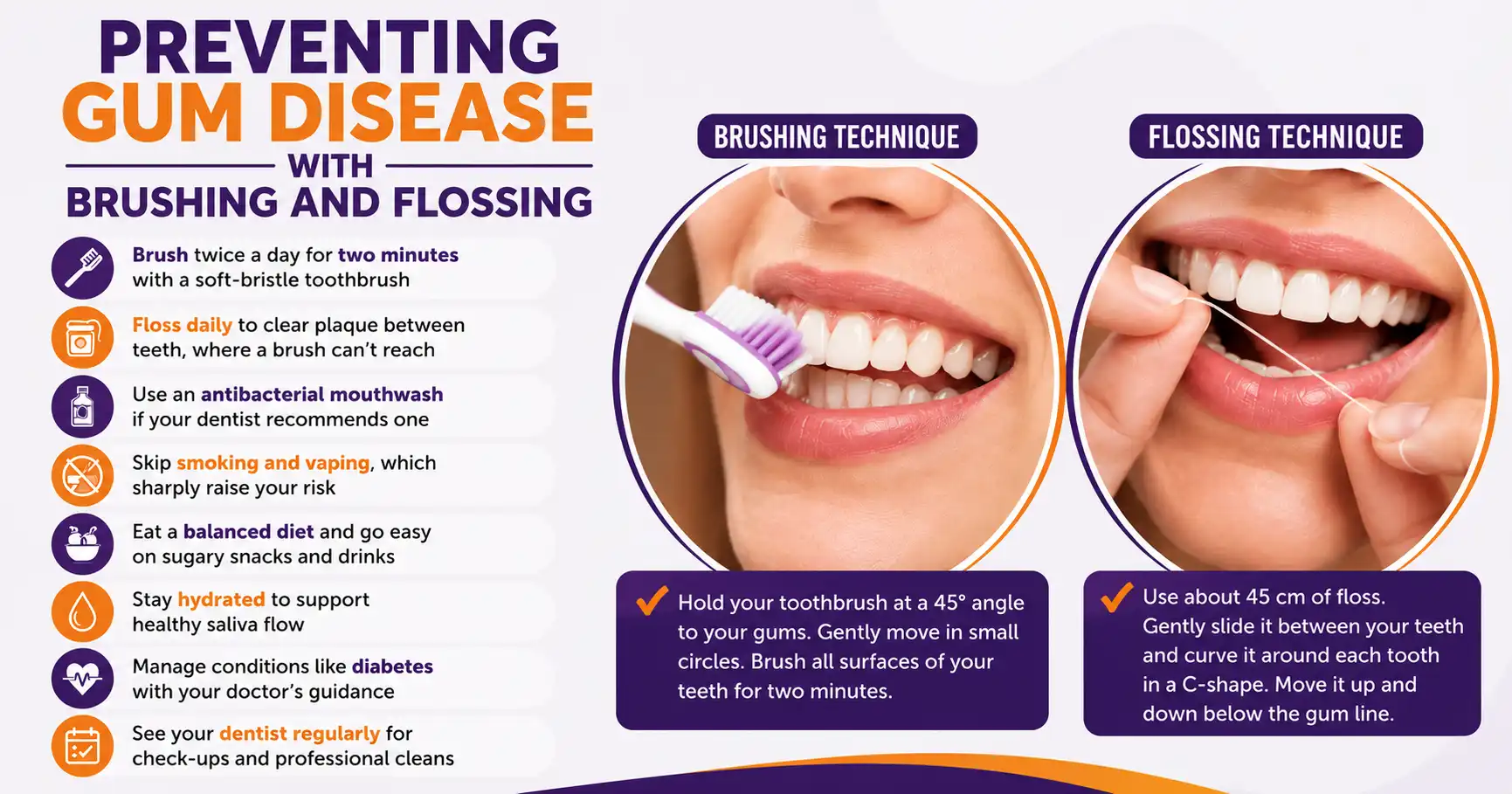
Good daily habits keep gum disease at bay:
- Brush twice a day for two minutes with a soft-bristle toothbrush
- Floss daily to clear plaque between teeth, where a brush can’t reach
- Use an antibacterial mouthwash if your dentist recommends one
- Skip smoking and vaping, which sharply raise your risk
- Eat a balanced diet and go easy on sugary snacks and drinks
- Stay hydrated to support healthy saliva flow
- Manage conditions like diabetes with your doctor’s guidance
- See your dentist regularly for check-ups and professional cleans
Regular check-ups are one of the best ways to catch gum disease early, before it does lasting damage to your gums, teeth, and jawbone.
When Should You See a Dentist?
Noticed any of the signs above? Don’t wait for them to get worse. Early treatment is simpler, more comfortable, and more affordable than tackling advanced gum disease later. Not sure whether what you’re seeing is a real problem? It’s still worth getting checked.
Frequently Asked Questions
What are the first signs of gum disease?
Bleeding when you brush or floss is usually the first sign, along with red, swollen, or tender gums. Bad breath that won’t shift is another early warning. Gum disease is often painless early on, so these visible signs matter most.
Can gum disease be reversed?
Gingivitis, the early stage, can often be reversed with a professional clean and better brushing and flossing at home. Once it advances to periodontitis and reaches the bone, the damage can’t be fully undone, but treatment can stop it getting worse.
Is bleeding when I brush always gum disease?
Not always, but it’s not normal either. Healthy gums don’t bleed during routine cleaning. Bleeding usually points to plaque building up along the gum line and inflammation starting. If it keeps happening, get your gums checked.
Does gum disease cause bad breath?
Yes. Bacteria trapped below the gum line release odours that cause persistent bad breath, or halitosis, and a bad taste. If your breath doesn’t improve after brushing, flossing, and mouthwash, gum disease could be the reason.
How is gum disease treated?
Early gum disease is treated with a professional clean and better home care. More advanced cases need a deep clean called scaling and root planing to remove bacteria below the gum line. Severe cases may need further treatment and ongoing maintenance.
Can you have gum disease without pain?
Yes, and most people do in the early stages. Gum disease is usually painless until it’s advanced, which is why it’s so easy to miss. Watching for signs like bleeding, swelling, and bad breath helps you catch it before it damages the bone.
To Sum Up
Our team can check your gums, spot early warning signs, and build a treatment plan to protect your smile for years to come. Book an appointment today, or learn more about our gum disease treatment services.