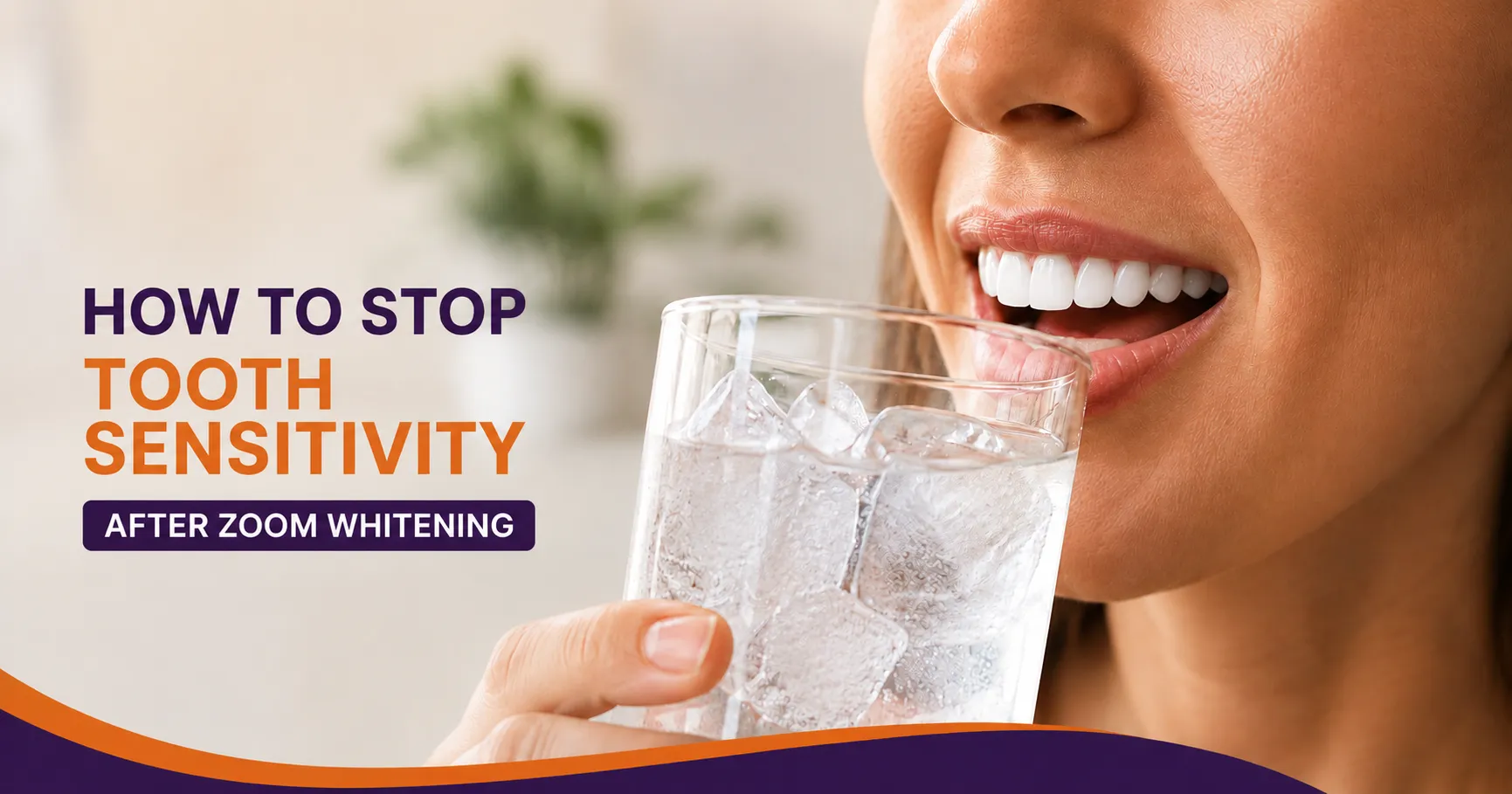
Sharp, sudden, gone in a second. Patients call them zingers, and they arrive out of nowhere in the hours after whitening.
Uncomfortable, but almost always short-lived. Here is how to stop tooth sensitivity after Zoom whitening, and how to tell the difference between normal recovery and something that needs a look.
How Long Does Sensitivity Last After Whitening?
Sensitivity after teeth whitening usually settles within 24 to 48 hours. Use a potassium nitrate desensitising toothpaste, avoid very hot and very cold food and drink, and apply the desensitising gel from your take-home kit. Ring your dentist if it lasts beyond two days.
Most people notice it fading by the following morning. A small number feel the odd zinger into day two or three.
Why Do My Teeth Hurt After Whitening?
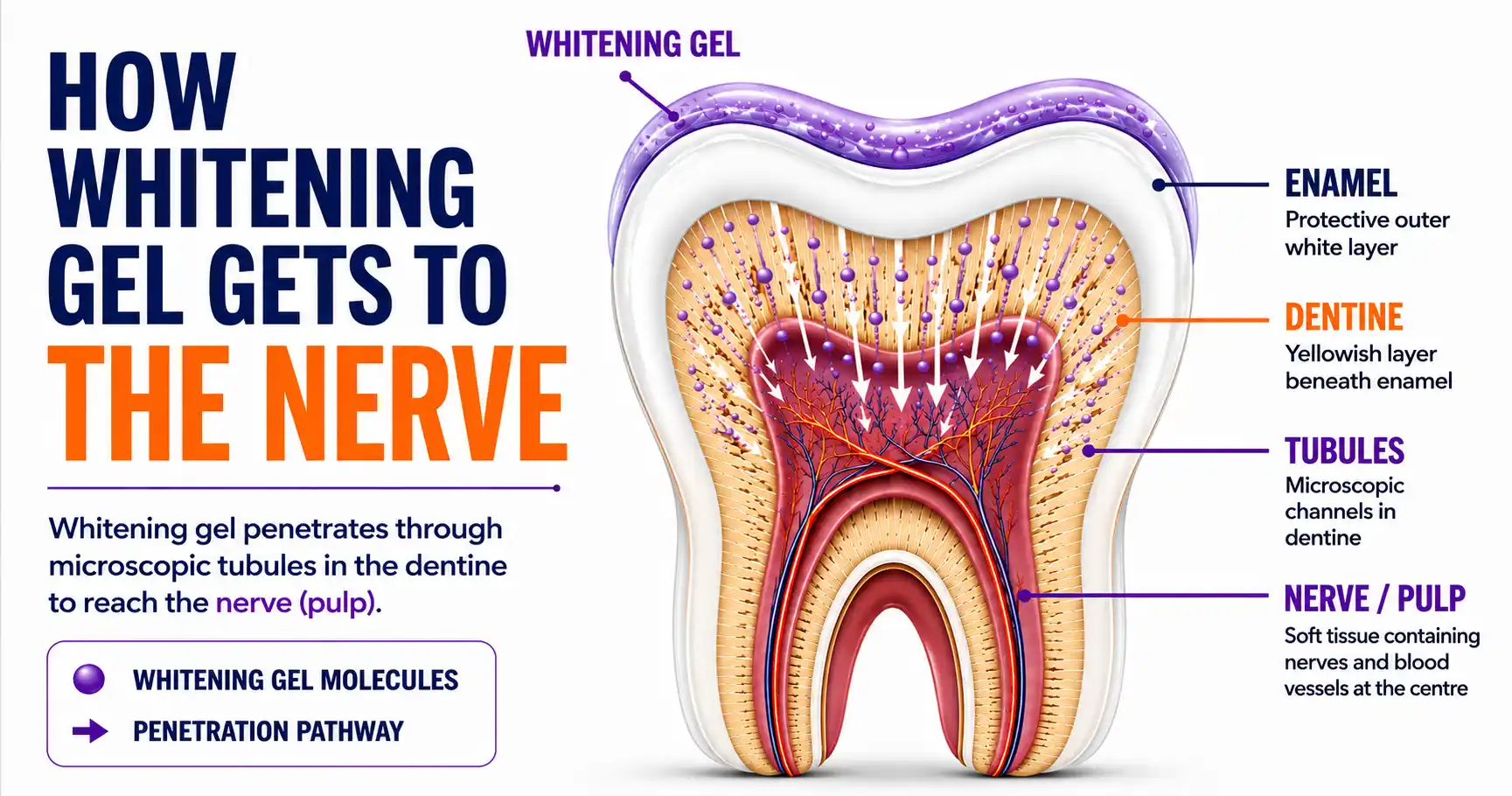
Whitening gel travels through the microscopic channels in your enamel to reach the stain sitting in the dentine below. Those channels connect to the nerve.
The peroxide causes short-term inflammation in the pulp, which is the living tissue at the centre of the tooth. Your nerve reacts to that by firing at things it would normally ignore. Cold air. A sip of water. Nothing at all.
Nothing is damaged. The nerve is irritated, not injured, and it calms down as the inflammation settles.
Existing problems make it worse. Receding gums expose root surface, which has no enamel over it. Worn enamel, untreated decay and cracks all give the gel a shorter path to the nerve, which is exactly why an examination comes before any whitening treatment.
How to Stop Tooth Sensitivity After Zoom Whitening?
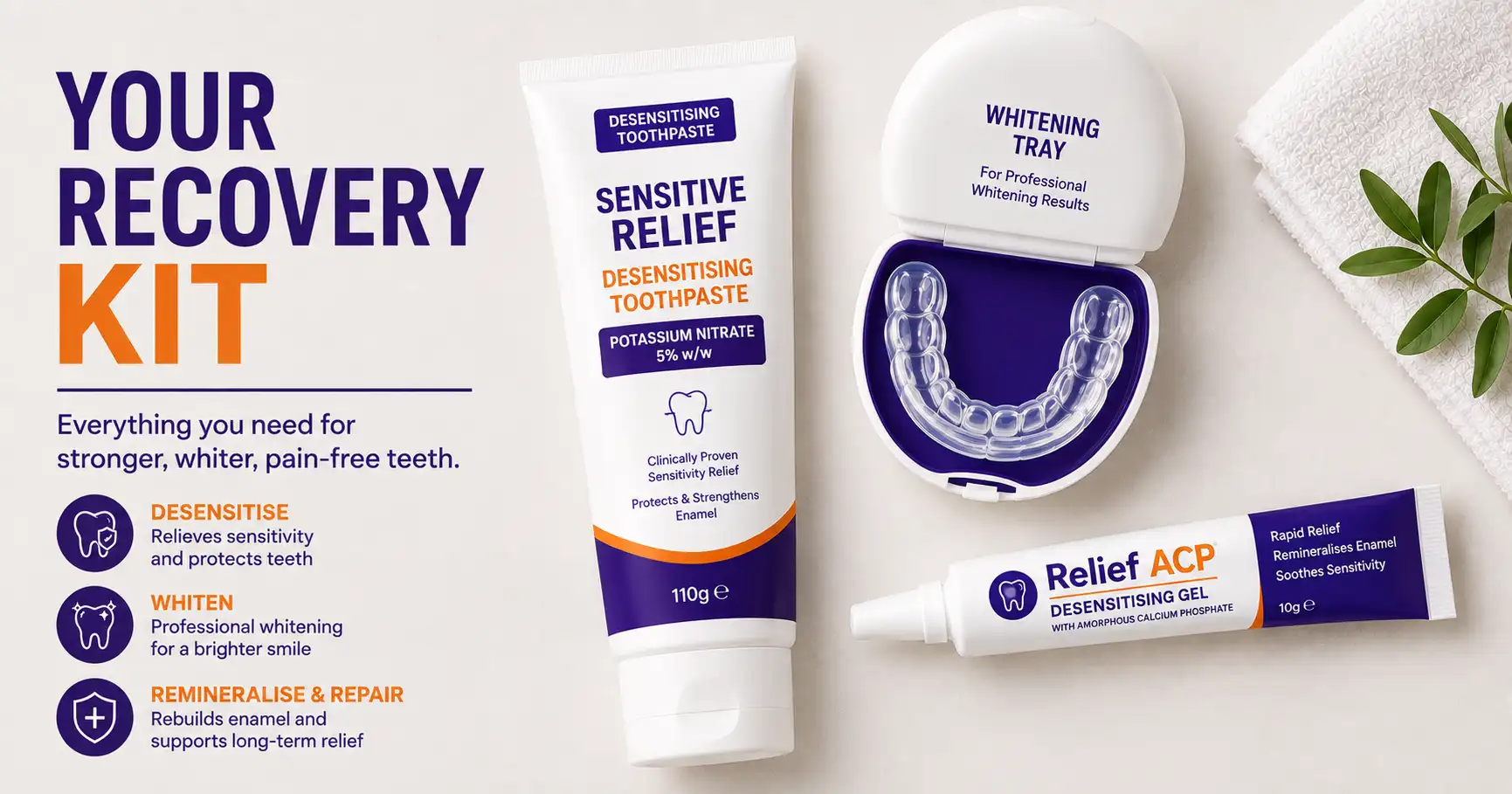
- Switch to a desensitising toothpaste. Look for potassium nitrate on the label. Sensodyne and similar work well. Brush gently, twice daily.
- Rub the toothpaste onto the sore tooth. Apply a small amount with a clean finger, leave it, and skip rinsing. Direct contact does more than brushing alone.
- Use the gel from your take-home kit. Relief ACP contains calcium phosphate, fluoride and potassium nitrate in a post-treatment formulation. Apply it in your trays for 10 to 30 minutes.
- Skip extremes of temperature. Room temperature food and drink for a day or two. No iced water, no piping hot coffee, and coffee is off the list for 48 hours anyway under the white diet.
- Take an anti-inflammatory if you need it. Ibuprofen taken as directed on the packet reduces the pulp inflammation causing the pain. Check with your pharmacist if you take other medication.
- Pause take-home whitening for a few days. Sensitivity means your teeth need a break, not that whitening has failed. Resume once it settles, with shorter sessions.
What Makes Sensitivity Worse?
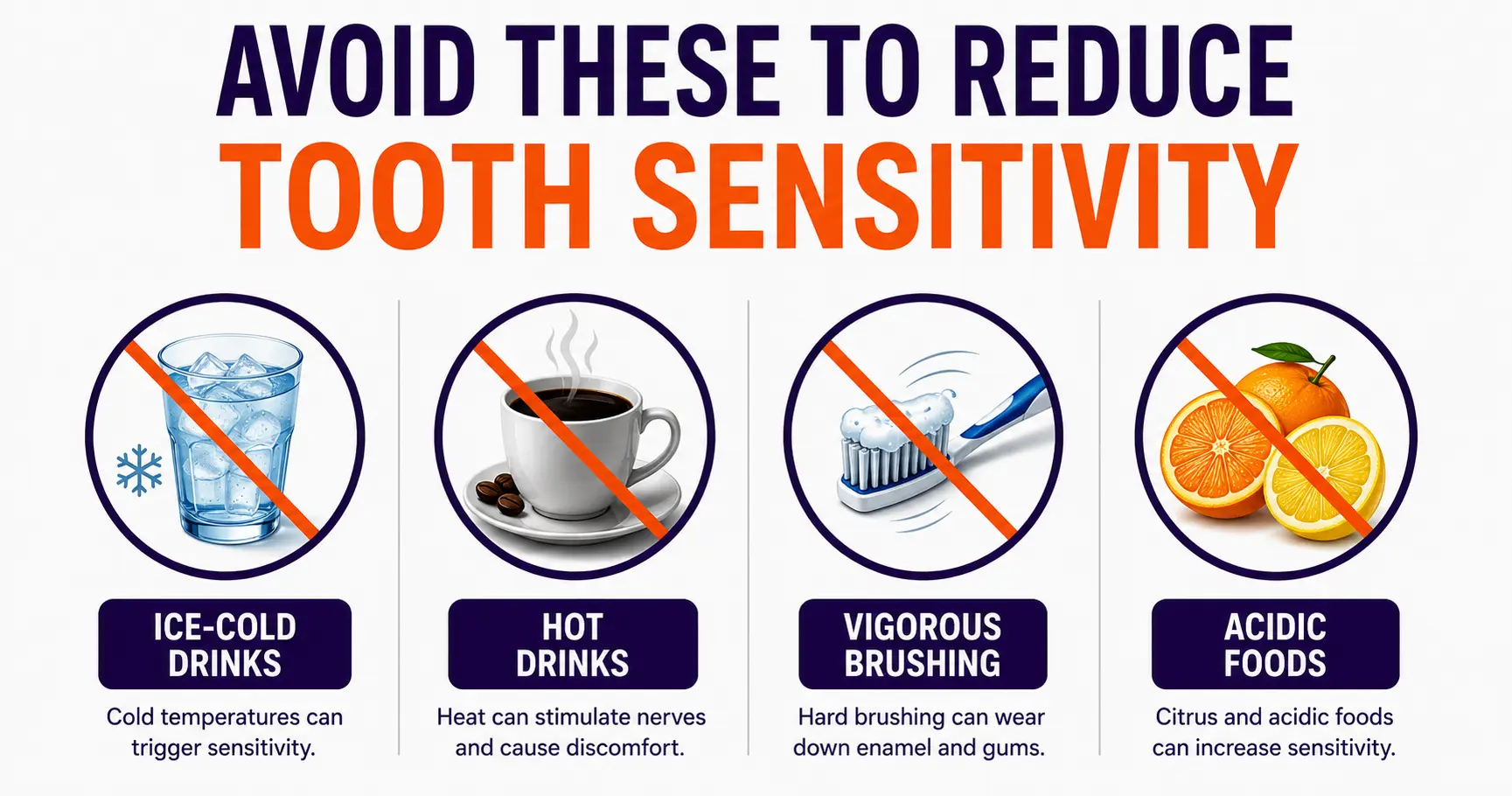
Four things people reach for that backfire.
Harder brushing does not help, and it wears more enamel at the gum line. Whitening again straight away to “push through” compounds the inflammation. Very cold or very hot drinks trigger the exact nerve you are trying to calm. And acidic foods and drinks such as citrus, soft drink and vinegar keep the enamel surface unsettled while it is trying to remineralise.
When Should I Ring the Dentist?
Most sensitivity needs nothing beyond patience and desensitising toothpaste. Ring us if any of the following applies.
- Discomfort lasting beyond two days
- One specific tooth staying painful while the others settle
- Pain that wakes you at night or throbs continuously
- Swelling, or gums that stay sore and inflamed
- Pain that arrives days after treatment rather than straight away
healthdirect advises seeing a dentist if irritation continues beyond one to two days. Continuous or throbbing pain in a single tooth points to something other than whitening sensitivity, and it needs looking at. We keep time free for urgent appointments.
How We Prevent Sensitivity Before It Starts
Prevention beats management, and it is the part almost nobody writes about.
Patients with a history of sensitive teeth start a potassium nitrate toothpaste two weeks before the appointment. That single step does more than anything applied on the day. We assess for exposed roots, worn enamel and decay at the consultation, and treat those first.
During treatment we adjust the LED intensity and shorten cycles rather than pushing a standard protocol on every mouth. Desensitising gel goes on at the end of every session, and the take-home kit includes more.
Philips reports that 99% of patients surveyed had little to no sensitivity during Zoom WhiteSpeed treatment. Planning is why.
Note: Any surgical or invasive procedure carries risks. Before proceeding, you should seek a second opinion from an appropriately qualified health practitioner.
Common Questions About Whitening Sensitivity
What are zingers after teeth whitening?
Zingers are the sharp, sudden jolts of pain that arrive without warning in the day or two after whitening. They come from short-term inflammation of the nerve inside the tooth, last a second or two, and fade as the inflammation settles.
Can teeth whitening cause permanent sensitivity?
Permanent sensitivity from professional whitening is rare. Discomfort that persists usually points to an underlying problem such as a receding gum, a crack or decay, rather than the whitening itself. Book a check-up if it continues past a few days.
What painkiller works best after whitening?
An anti-inflammatory such as ibuprofen, taken as directed, targets the pulp inflammation causing the pain. Take it with food, and check with your pharmacist if you take other medication or have a condition that rules it out.
Should I stop whitening if my teeth hurt?
Pause take-home whitening for a few days rather than pushing through. Sensitivity means the tooth needs recovery time. Restart with shorter sessions once it settles, and tell your dentist so the plan can be adjusted.
Can I whiten again if I got sensitivity last time?
Yes, with a modified plan. Start desensitising toothpaste two weeks beforehand, and we lower the light intensity and shorten the cycles. Many patients who struggled the first time have no trouble the second.
Talk to Us Before You Whiten
Sensitivity gets planned for at Kings Langleys Dental Surgery, not treated as an afterthought. Every whitening patient gets an examination, a protocol matched to their teeth, and desensitising gel to take home.
Call (02) 9674 1964 or book an appointment to talk through Philips Zoom whitening.