
Most dental implants are still working 10 years after they go in, and many keep going well past that. The titanium post sits in your jawbone and, with good care, can stay there a very long time. The crown on top is a different story. It takes the daily wear of chewing, so it may need replacing before the implant does.
The longer answer depends on your health, your habits and how you look after your mouth. Our dental implants page covers the treatment itself. This post sticks to one question: how long will it last?
How long do dental implants last?
A dental implant has three parts. A small titanium post goes into the jawbone in place of the tooth root. An abutment connects that post to the crown, which is the part you see and chew with.
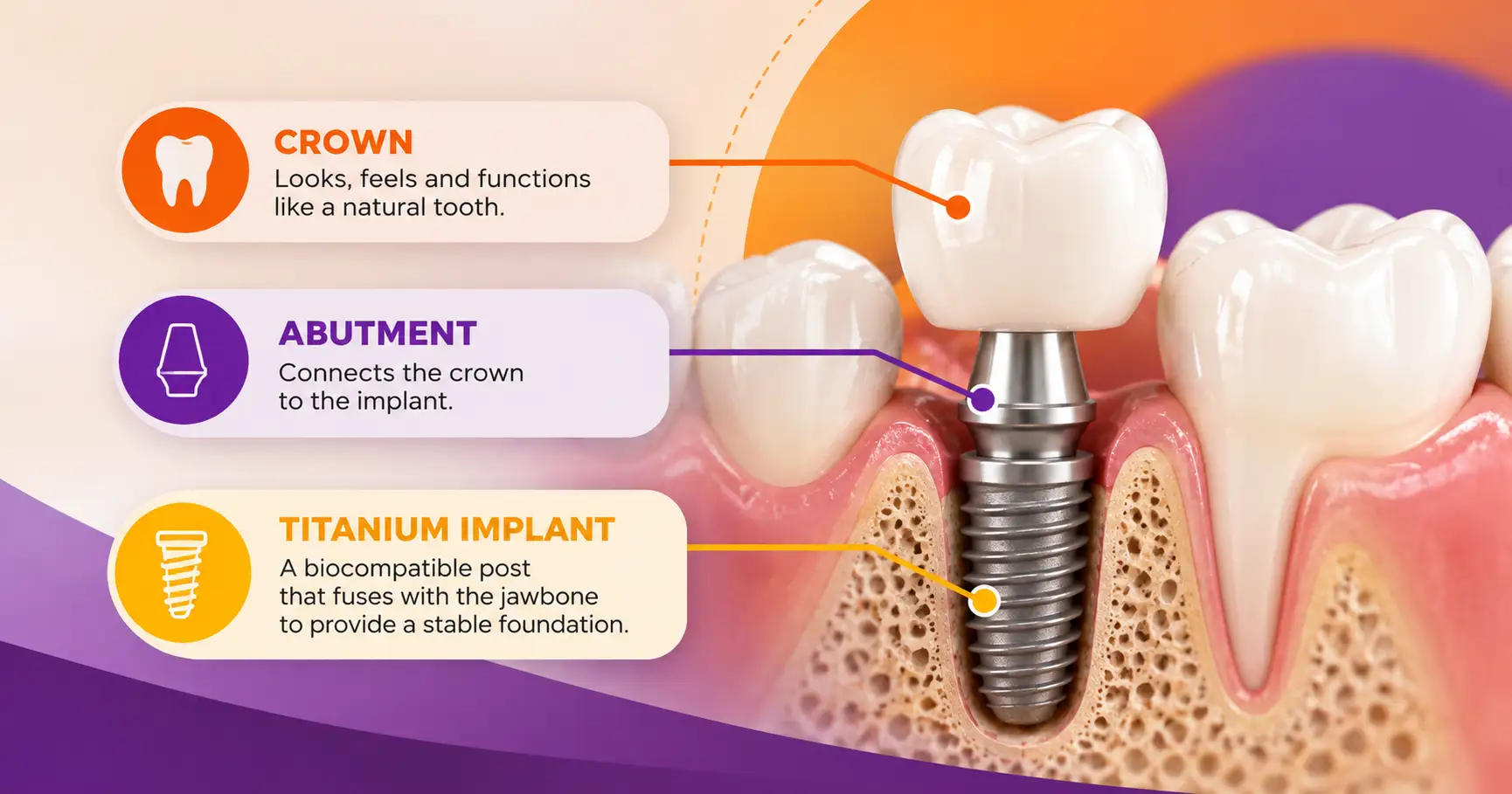
After placement, your bone grows onto the titanium surface. Dentists call this osseointegration, and it’s what holds the implant firm. Once that bond forms, the post doesn’t wear down the way a filling or a denture does.
So here’s the plain answer. The implant post can last a very long time, and most are still in place at the 10-year mark. The parts above the gum, and the health of the gum itself, decide a lot of the rest.
What does the research say about dental implant lifespan?
Most dental websites quote “15 to 25 years” or “a lifetime” and leave it there. Few say where those numbers come from. So here’s what one of the larger reviews found.
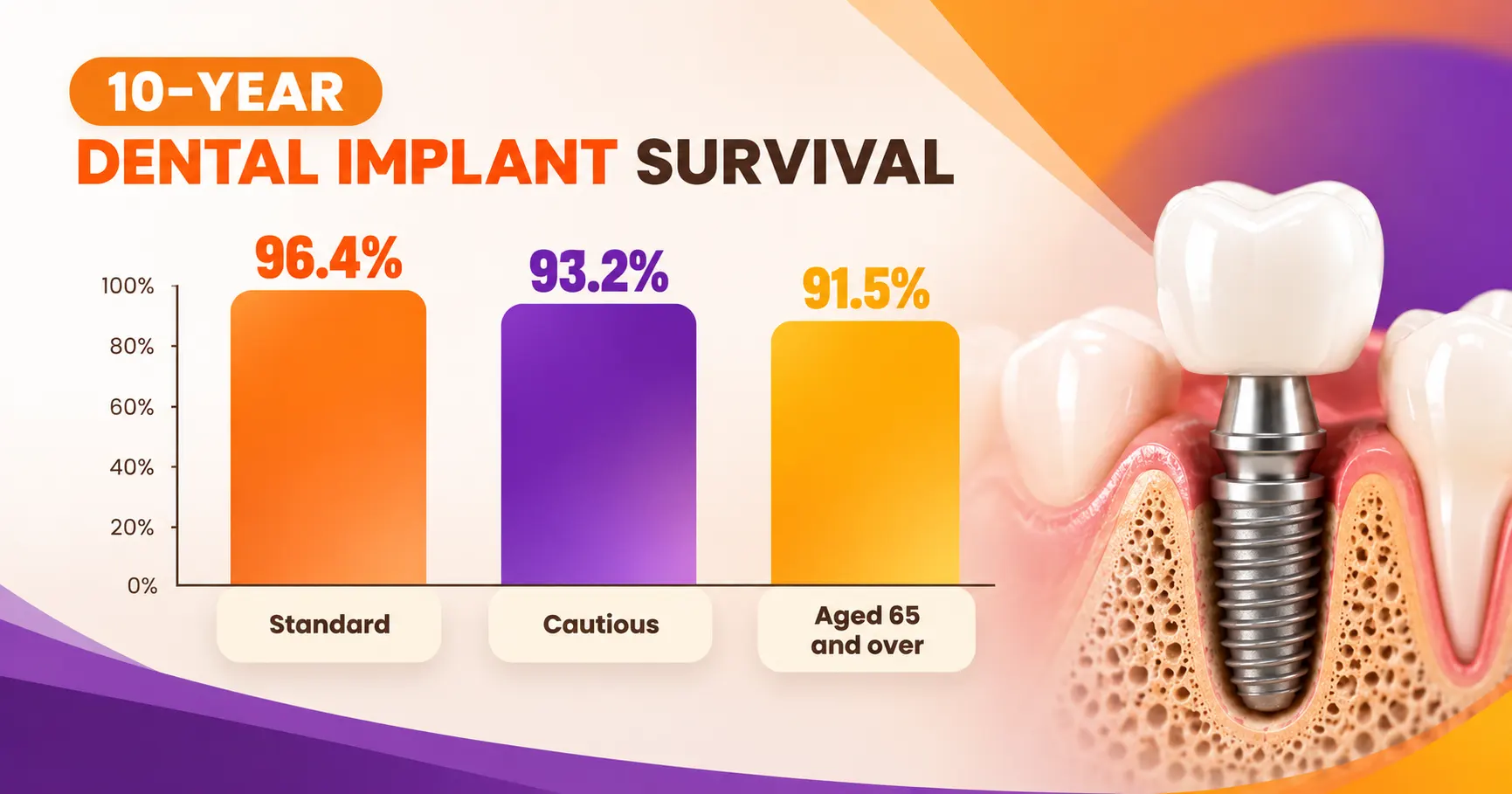
In 2019, the Journal of Dentistry published a systematic review of 18 long-term implant studies. On the standard analysis, 96.4% of implants were still in place after 10 years. The researchers then reran the numbers more cautiously, allowing for patients who dropped out of the studies along the way. That figure came in at 93.2%.
Which number should you go by? The authors themselves said the cautious figure gives a better picture of real-world risk. Even so, that’s roughly 93 implants in every 100 still in place a decade later.
Does age change the odds?
Yes, a little, and few clinics mention it. The same review found 10-year survival of 91.5% in people aged 65 and over. The authors flagged a possible doubling of the risk of implant loss in that group.
That doesn’t rule anyone out. So bring it up. Your heart, your bones, the tablets you take each morning: they all matter more than the age on your licence. Our guide, are dental implants right for me?, walks through who tends to suit them.
One catch. These studies only counted whether the implant was still in the jaw. An implant with sore, bleeding gums around it still counts as a survivor. So take any promise of a lifetime with a grain of salt.
What affects how long a dental implant lasts?
Which wears out first: the implant or the crown?
Usually the crown. Think about what it deals with: ice cubes, crusty bread, the olive pip you didn’t see coming. Over the years a dental crown can chip, wear down or work loose. The tiny screw holding the abutment can loosen as well.
Better news: a dentist can often fix or swap those parts without touching the implant in your bone. Night-time grinding wears them faster. Most grinders don’t know they do it (a sleeping partner often does), so mention it.
Do smoking, gum disease and health problems shorten an implant’s life?
The biggest one is smoking. Researchers writing in Medicina in 2021 combed through 292 publications. Their finding: implants in smokers had about 2.4 times the odds of failing. Smokers lost more bone around their implants, too. Even the Australian Dental Association says smokers may not be good candidates.
Gums and bone count just as much. An implant needs enough jawbone to grip, and the ADA calls that one of the most important factors of all. Severe gum disease can also stand in the way.
On a few daily medications, or living with a long-term condition? Tell your dentist. Some affect how you heal and how your bone behaves.
How does implant lifespan compare to dentures and bridges?
Where we give a “rule of thumb”, that’s a typical range dentists see in practice, not a study figure. Your own mouth may differ.
| Option | How long it tends to last | Daily care | Check-ups |
|---|---|---|---|
| Implant (titanium post) | 93% to 96% still in place at 10 years (Journal of Dentistry, 2019) | Brush twice a day. Clean between the implant and nearby teeth daily (ADA). | Regular check-ups and cleans |
| Crown on an implant | Often 10 to 15 years before it needs work (rule of thumb) | Same as above | Checked at each visit |
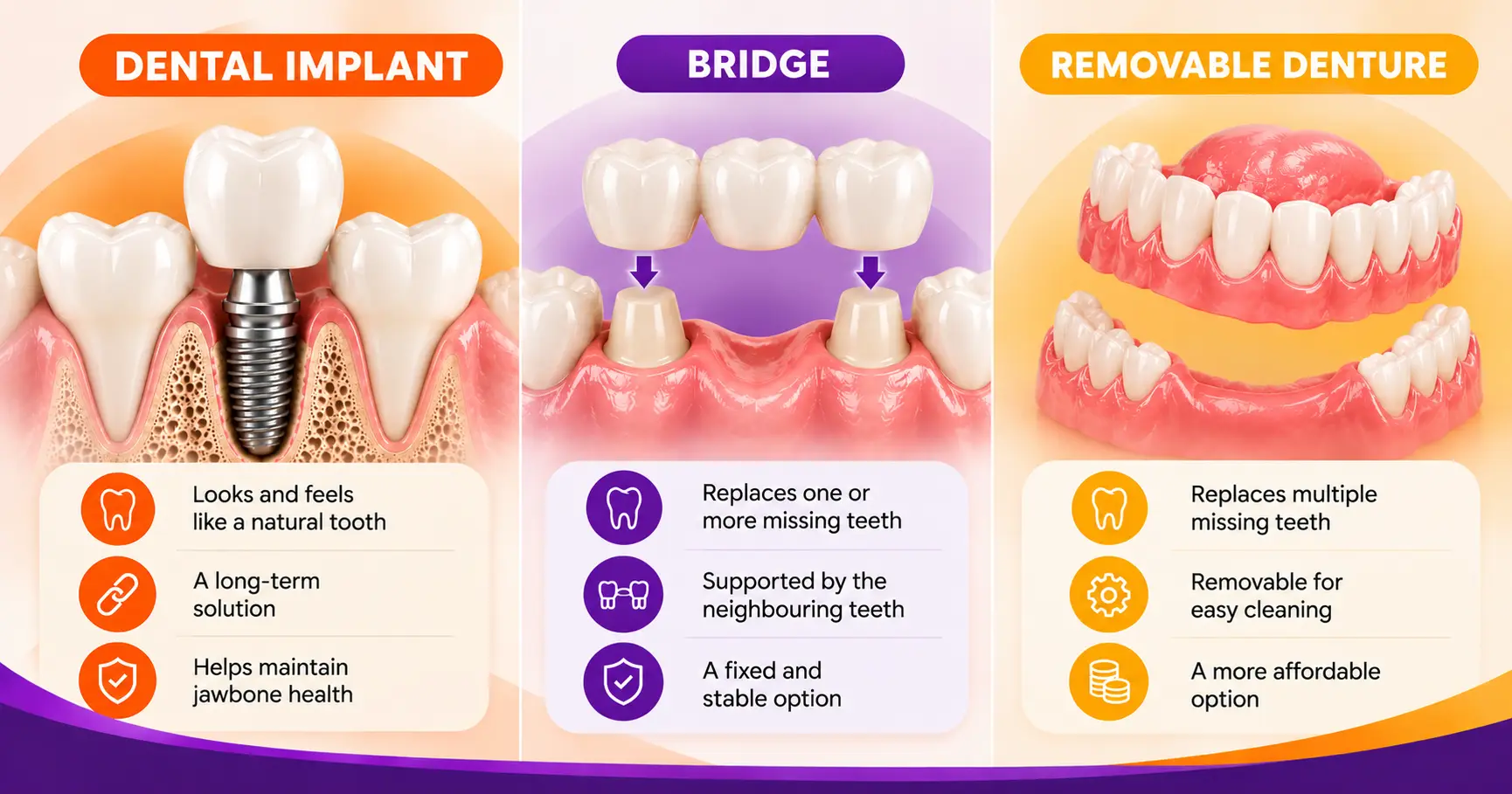
| Bridge | Often around 10 to 15 years (rule of thumb). Relies on the neighbouring teeth staying healthy. | Brush, and clean under the false tooth with a floss threader or small brush. | Regular check-ups |
| Removable denture | Often 5 to 10 years before it needs replacing or relining (rule of thumb) | Clean twice a day, morning and night (Healthdirect). | Fit checked at least once a year (Healthdirect). |
Our bridges and partial dentures page explains how those options work. Lifespan is only one part of the choice. For comfort, cost and day-to-day living, read our guide to dental implants vs dentures.
Still deciding between options? Book a consultation at Kings Langleys Dental Surgery on Solander Road. We’ll look at your bone, gums and bite, and talk through whether an implant suits you. Call (02) 9674 1964.
Do dental implants last forever?
No dentist can promise that. The best long-term research follows implants for around 10 years, and beyond that the data thins out. Many keep working long after, but nobody can guarantee “forever”.
What changes over time is rarely the titanium. It’s the gum and bone around the implant, and the crown on top. Keep those healthy and you give the implant its best chance.
What are the signs of implant failure?
Implant problems rarely appear overnight. Most start in the gum.
The ADA describes peri-implantitis as inflammation of the gums and bone loss around an implant. Left untreated, it can lead to the implant failing. Catch it early and your dentist has far more options. Many of the warning signs match the signs of gum disease around natural teeth.
Watch for:
- gums around the implant that bleed, swell or look red
- pus or a bad taste near the implant
- gum shrinking back so you can see metal
- pain or tenderness when you bite
- an implant or crown that feels loose or moves
A loose crown and a loose implant aren’t the same thing. A loose crown or screw is often a quick fix. An implant that moves in the bone is more serious.
How do you care for dental implants?
Treat an implant like a natural tooth, with extra attention at the gumline. The ADA recommends:
- Brush twice a day, including around the base of the implant.
- Clean between the implant and the teeth beside it every day. Floss, small interdental brushes or a water flosser can all work. Ask us which suits the gaps in your mouth.
- Keep up regular check-ups and cleans, so your dentist can spot gum changes before you feel them.
Two more habits help. Stop smoking to protect the bone (iCanQuit and the Quitline on 13 7848 offer free help), and wear a night guard if you grind. And skip using your teeth to open packets or crack nuts. Crowns don’t love it.
When should you see a dentist about your implant?
Call us the same day for:
- an implant that feels loose or moves
- any swelling in the gum or face
- pus, or pain that doesn’t settle
- a knock or fall that hit your mouth
Book a check-up soon for:
- gums that bleed when you brush around the implant
- food catching around it
- a chipped crown
- a change in how your bite feels
Our emergency dental care page covers other urgent problems. Otherwise, regular check-ups let us spot small changes early.
Ready to talk about implants?
Every mouth is different, so the most useful answer comes from an examination. Book a consultation at Kings Langleys Dental Surgery, 7 Solander Rd, Kings Langley, and we’ll talk through your options with you. Call (02) 9674 1964 or send us an appointment request, and read more on our dental implants page.
Any surgical or invasive procedure carries risks. Before proceeding, you should seek a second opinion from an appropriately qualified health practitioner.
Frequently asked questions
Can a dental implant last 30 years?
Possibly. Nobody can give you a figure, though, because the big studies stop at around 10 years. What helps is no mystery: healthy gums, enough bone, no cigarettes and turning up for your check-ups. Get those right and an implant has a real shot at decades.
Are dental implants worth it if I’m over 65?
Age alone doesn’t rule you out. One 2019 review did find slightly lower 10-year survival after 65 (91.5%). Still, your general health, your bone and the medicines you take tell your dentist far more than your date of birth. An examination is where to start.
Do dental implants ever need replacing?
The titanium post often doesn’t, as long as the bone and gum around it stay healthy. The crown’s a different matter. It cops every meal, so a chip or a worn edge years down the track wouldn’t be surprising. Your dentist can usually repair or replace it while the implant stays put.
Can I get a dental implant if I smoke?
You can, but the odds shift. In a 2021 review covering 292 publications, smokers’ implants had about 2.4 times the odds of failing, and more bone loss too. The Australian Dental Association says smokers may not be good candidates. Quit first and you give the implant a better chance.
Can a failed implant be replaced?
Often, yes. It comes down to why the first one failed and how much bone you’ve got left. Your dentist may need to clear up any infection and give the area time to heal. Some people need a bone graft first. An exam and X-rays will show what’s possible.