
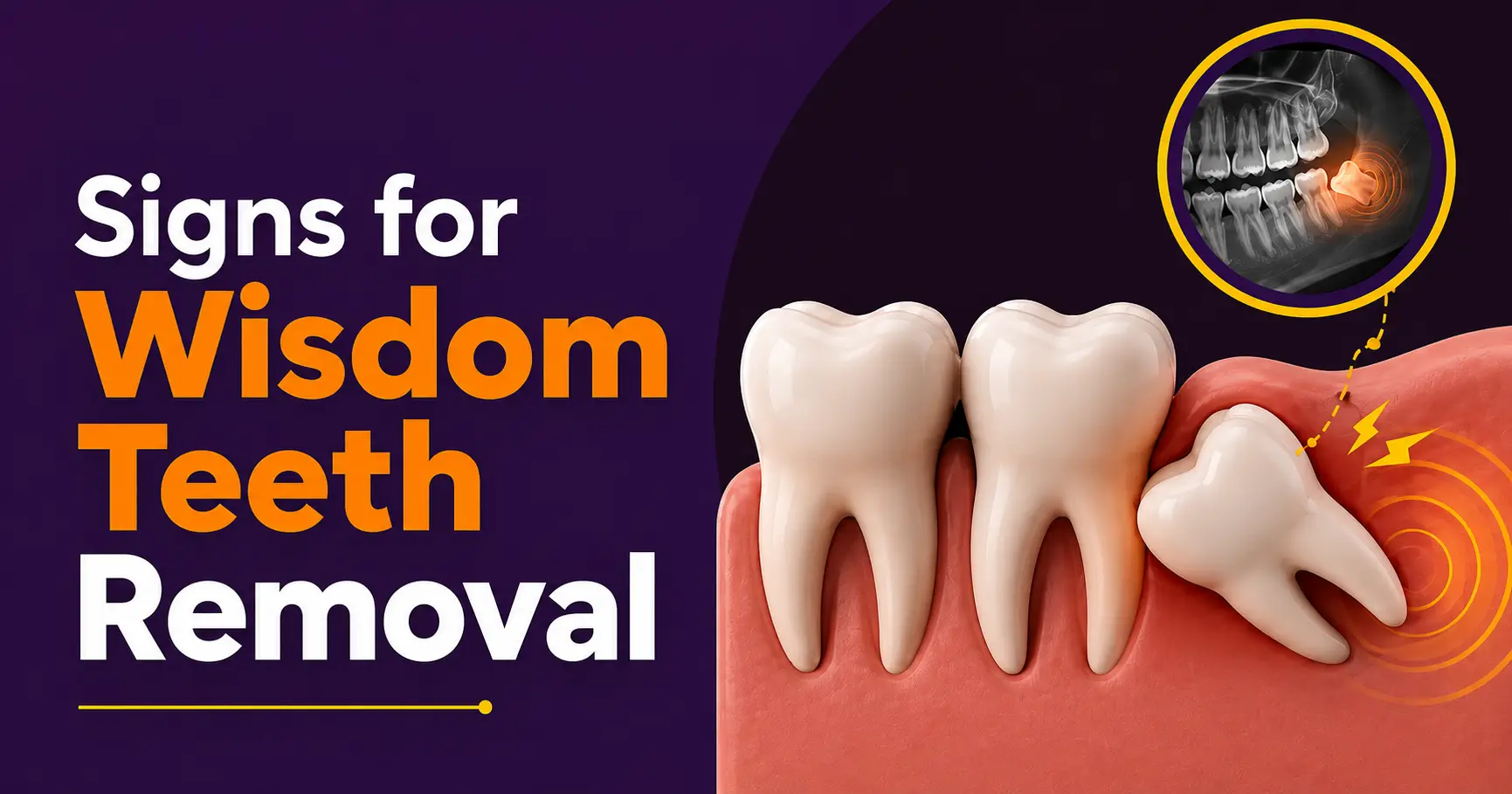
Wisdom Teeth Removal may become necessary when the back teeth cause pain, swelling, infection or damage to nearby teeth. Wisdom teeth, also called third molars, usually appear in the late teens or early adult years. Some grow normally. Others become stuck, come through only partly or sit at an angle.
A wisdom tooth can create a hard-to-clean space at the very back of the mouth. Food and bacteria may collect there. Over time, this can lead to soreness, gum swelling, bad breath, infection or decay.
Not every wisdom tooth needs removal. Some stay healthy for life. The key is knowing which symptoms need a dental check and which warning signs may point to a wisdom tooth infection.
What Are Wisdom Teeth?
Wisdom teeth are the last adult molars at the back of the mouth. Most people develop up to four wisdom teeth, though some people have fewer or none.
The Australian Dental Association says wisdom teeth commonly appear around ages 18 to 25. A wisdom tooth can grow through the gum like a normal molar, but it can also stay trapped under the gum or push against the tooth beside it. Dentists call this an impacted wisdom tooth.
A fully erupted wisdom tooth may not cause any problem when it has enough room and remains easy to clean. Trouble often starts when the tooth becomes partly covered by gum, traps bacteria or affects the nearby molar.
You can also read more about wisdom tooth information and common wisdom tooth concerns for extra context.
Why Do Wisdom Teeth Cause Problems?
Wisdom teeth often cause problems because the back of the jaw may not have enough room for them. A tooth may grow sideways, press into the second molar or only partly break through the gum.
A partly erupted wisdom tooth can leave a small flap of gum over the tooth. This area can trap food and bacteria. Even careful brushing may not clean it well.
Trapped plaque can irritate the affected area, cause infection or lead to decay. The tooth beside the wisdom tooth can also develop decay if bacteria sit between the two teeth for too long. This is why early assessment matters when symptoms begin. The guide to tooth decay and cavities explains how plaque can damage teeth in hard-to-clean areas.
Signs You May Need Wisdom Teeth Removal
Wisdom Teeth Removal may help when symptoms keep returning or a dentist finds clear signs of disease. These symptoms do not always mean the tooth must come out, but they do mean you should book a dental assessment.
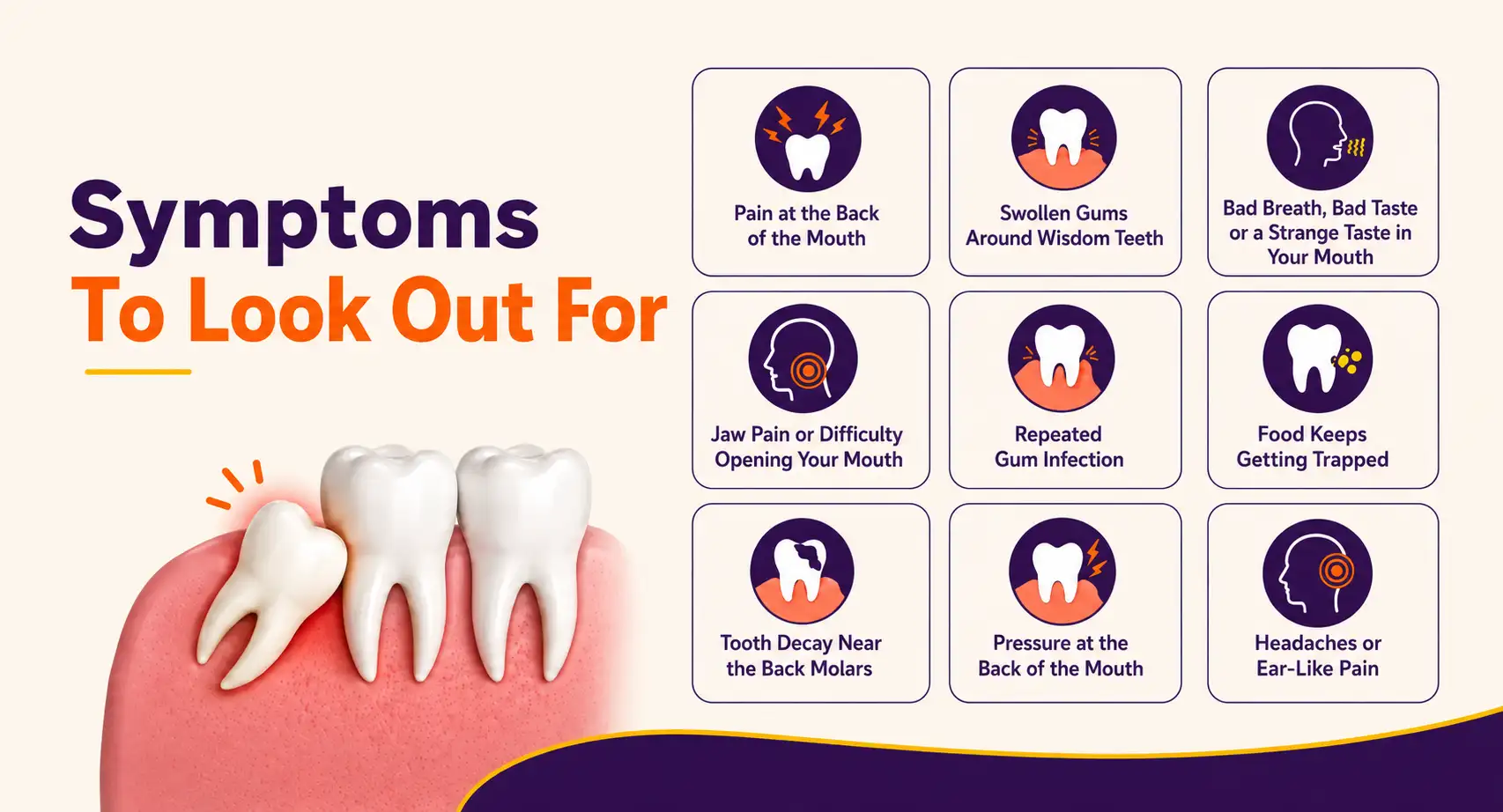
Pain at the Back of the Mouth
Pain behind the last molar often gives the first warning sign. The pain may feel dull, sharp, throbbing or pressure-like.
Some people only notice it while chewing. Others feel it at night, while brushing or while opening the mouth wide. Pain that comes and goes still needs attention when it keeps returning.
A dentist can check whether the pain comes from the wisdom tooth, gum infection, decay, jaw strain or another dental issue. The tooth pain page explains other common causes of dental pain.
Swollen Gums Around Wisdom Teeth
Swollen gums around wisdom teeth can point to inflammation or infection. The gum may look red, puffy or sore. The area may also bleed during brushing or feel tender when you chew.
A partly erupted wisdom tooth can leave gum tissue sitting over the tooth. Bacteria can collect under that gum flap and cause irritation. Dentists call inflammation around the crown of a partly erupted tooth pericoronitis.
Swelling that spreads to the face, throat or jaw needs urgent care. The dental infection page explains infection warning signs in more detail.
Bad Breath, Bad Taste or a Strange Taste in Your Mouth
A bad taste near the back of the mouth can signal trapped food, bacteria or pus around a wisdom tooth. You may also notice a strange taste in your mouth, especially near the affected area. Bad breath may continue even after brushing.
This often happens with gum tenderness, bleeding or swelling. Mouthwash may hide the smell for a short time, but it will not remove a deep pocket of trapped bacteria.
A dentist can clean the area properly and check whether the wisdom tooth keeps causing the problem. The page on bad breath may help if this symptom appears often.
Jaw Pain or Difficulty Opening Your Mouth
Wisdom tooth problems can make the jaw feel sore, tight or difficult to open. Difficulty opening your mouth can happen when swelling affects the soft tissues around the back molars.
Pain may spread towards the ear, cheek or temple. You may notice discomfort while eating, yawning, speaking or brushing.
A dental examination can show whether the stiffness comes from the wisdom tooth or another issue, such as jaw joint strain. The guide to jaw problems and headaches explains related symptoms.
Repeated Gum Infection
One short episode of soreness may settle with cleaning and care. Repeated infection tells a different story.
The gum around a partly erupted wisdom tooth can become infected again because the same pocket keeps trapping bacteria. Symptoms may include pain, swelling, bleeding, pus, a bad taste or trouble cleaning the area.
A wisdom tooth infection can raise the risk of infection spreading to nearby tissues. A dentist may discuss removal when the tooth keeps causing infection or creates a high risk of future problems.
Food Keeps Getting Trapped
Food that repeatedly gets stuck behind the last molar can irritate the gum and feed bacteria. You may feel like something sits under the gum no matter how well you rinse.
This usually happens when a wisdom tooth has only partly come through. The tooth and gum create a pocket that normal brushing cannot clean well.
Regular food trapping can raise the risk of decay on the wisdom tooth and the tooth beside it. The page on tooth decay, cavities and caries explains why early care matters.
Tooth Decay Near the Back Molars
Decay can develop on the wisdom tooth or on the second molar in front of it. The area sits far back in the mouth, which can make brushing and flossing difficult.
You may not feel decay at first. A dentist may find it during an examination or on an X-ray.
Deep decay can sometimes affect the nerve inside a tooth. The root canal treatment guide explains what may happen when infection reaches the inner part of a tooth.
Pressure at the Back of the Mouth
Some people feel pressure as wisdom teeth push through the gum. The pressure may feel like tightness behind the back molars.
Pressure alone does not prove that wisdom teeth will move the front teeth. The Australian Dental Association notes that current evidence does not support the idea that wisdom teeth cause other teeth to become crooked.
Still, pressure with pain, swelling, infection or decay needs a dental review.
Headaches or Ear-Like Pain
Wisdom tooth pain can travel. You may feel discomfort near the ear, temple, cheek or side of the face.
This can feel confusing because the wisdom tooth itself may not hurt all the time. A dentist can examine the teeth, gums and bite to find the true cause.
Healthdirect recommends dental advice for a toothache that lasts more than a couple of days or appears with swelling, fever or trouble swallowing.
Does Every Wisdom Tooth Need Removal?
No. Every wisdom tooth needs removal.
A wisdom tooth may stay in place when it has enough room, grows through properly, bites normally and remains easy to clean. A dentist may simply monitor it during routine check-ups.
Removal becomes more likely when the tooth causes:
- Ongoing pain
- Repeated infection
- Tooth decay
- Gum disease
- Cysts
- Ulcers
- Food trapping
- Damage to the neighbouring tooth
- A long-term risk of infection or decay
The right decision depends on symptoms, tooth position, age, oral health and X-ray findings.
What Happens at a Wisdom Tooth Check-Up?
A wisdom tooth check-up starts with a discussion about your symptoms. A dentist may ask where the pain sits, how long it has lasted and whether swelling, bad breath, jaw stiffness or a bad taste comes with it.
The dentist then examines the back of the mouth and gums. A dental X-ray may help show:
- Where the wisdom tooth sits
- Whether it has enough room to come through
- The angle of the tooth
- The shape of the roots
- Whether the tooth sits close to nerves
- Whether decay affects nearby teeth
After the assessment, the dentist may explain your treatment options. These may include monitoring, cleaning around the tooth, short-term infection care, wisdom tooth extractions or referral to an oral surgeon.
A clear treatment plan should explain what the dentist found, why treatment may help, what risks apply and what recovery may involve.
Patients who feel nervous can ask about comfort options before treatment. Learn about dental anxiety and pain-free dentistry, and see how common ways dental teams help people feel calmer during care.
What Happens During Wisdom Tooth Extractions?
Wisdom tooth extractions can vary from simple to more complex. A fully erupted wisdom tooth may come out like a standard extraction. An impacted tooth may need surgical removal, especially when it sits under gum or bone.
Many people have treatment with local anaesthetic, which numbs the affected area. Some complex cases may need sedation or general anaesthetic, especially when several wisdom teeth need removal or the tooth position looks difficult.
A dentist or oral surgeon should explain the steps before treatment begins. They should also discuss aftercare, healing time and possible risks.
What Is Dry Socket?
Dry socket can happen after a tooth extraction when the protective blood clot comes away too early or fails to form properly. This can expose the bone and cause strong pain.
Symptoms may include worsening pain a few days after extraction, a bad taste, bad breath or pain that travels towards the ear.
Dry socket needs dental care. A dentist can clean the area, place a dressing if needed and give aftercare advice. Good aftercare can lower the risk, but dry socket can still happen even when you follow instructions.
The guide on what to do following an extraction explains common recovery steps after a tooth removal.
How Urgent Are Wisdom Tooth Symptoms?
Mild soreness still deserves a dental check, but some symptoms need faster attention.
Seek urgent dental care if you notice:
- Facial swelling
- Swelling under the jaw
- Trouble opening your mouth
- Difficulty opening your mouth that gets worse
- Trouble swallowing
- Fever or feeling unwell
- Pus or a strong bad taste
- Worsening pain
- Bleeding that does not settle
- Pain that stops you from sleeping or eating
These symptoms can point to infection or another serious dental problem. Early care can reduce pain and lower the risk of complications. The emergency dental care page explains what to do when symptoms feel urgent.
Can Wisdom Tooth Pain Go Away by Itself?
Wisdom tooth pain can settle for a while, especially when the tooth is erupting or the gum has mild irritation. This does not always mean the problem has gone.
Pain that returns often points to a tooth position or gum pocket that keeps trapping bacteria. The same issue may flare again after food gets stuck, during illness or when the area becomes harder to clean.
A dentist can tell whether home care, monitoring or removal makes the most sense. Get knowledge on dental concerns which may help you compare symptoms before booking.
Can Home Remedies Help Wisdom Tooth Pain?
Home remedies may help mild discomfort for a short time, but they cannot fix an impacted wisdom tooth, deep decay or infection.
A warm saltwater rinse may soothe sore gums and help clear loose food from the affected area. Gentle brushing around the back teeth can also help reduce plaque.
You can try:
- Brushing gently around the back teeth with a small-headed toothbrush
- Using a warm saltwater rinse
- Avoiding hard foods that press into sore gum
- Using pain relief only as directed on the label or by a health professional
- Avoiding sharp objects near the gum
Pain, swelling, fever, pus or difficulty swallowing needs prompt care. Home remedies should never delay urgent dental treatment.
Key Takeaways
- Wisdom teeth can cause pain, swelling, infection, bad breath, jaw stiffness and decay.
- A wisdom tooth does not always need removal.
- Swollen gums around wisdom teeth may point to inflammation or infection.
- A bad taste or strange taste in your mouth can come from trapped bacteria or pus.
- A dental X-ray can show the tooth position, root shape and nearby structures.
- Repeated infection around a wisdom tooth often needs closer review.
- Early assessment can help protect the tooth beside the wisdom tooth.
- Severe swelling, fever, pus or trouble swallowing needs urgent attention.
FAQ
How do I know my wisdom teeth need removal?
You may need wisdom tooth removal if pain, swelling, infection, decay, food trapping or gum inflammation keeps returning. A dentist can confirm the cause with an examination and dental X-ray. Some wisdom teeth stay healthy and only need monitoring.
Can wisdom teeth cause jaw pain?
Yes, wisdom teeth can cause jaw pain when swelling, pressure or infection affects the back of the mouth. The pain may spread towards the ear or temple. A dentist can check whether the wisdom tooth, jaw joint or another dental issue causes the discomfort.
Does every impacted wisdom tooth need to come out?
No. Some impacted wisdom teeth do not cause symptoms or disease. A dentist may monitor them with regular check-ups. Removal may become necessary when the tooth causes pain, infection, decay, cysts, gum problems or damage to a nearby tooth.
What happens during wisdom tooth removal?
The dentist numbs the area with local anaesthetic before removing the tooth. Some cases need a simple extraction, while impacted teeth may need surgical removal. Some people may need sedation or general anaesthetic. The dentist should explain the process, risks and aftercare before treatment begins.
Can swollen gum around a wisdom tooth mean infection?
Yes, swollen gum around a wisdom tooth can signal inflammation or infection, especially when the tooth has only partly come through. You may also notice pain, bleeding, bad breath or a bad taste. A dentist should check recurring or worsening swelling.
Can a wisdom tooth infection cause a bad taste?
Yes, a wisdom tooth infection can cause a bad taste or strange taste in your mouth. This may happen when bacteria, trapped food or pus sits around the gum. A dentist should check the area, especially when pain, swelling or fever appears.
Can I wait and see if wisdom tooth pain settles?
Mild discomfort may settle, but recurring pain needs a dental check. A wisdom tooth can cause infection or decay even when pain comes and goes. Book sooner if swelling, fever, pus, trouble swallowing or trouble opening your mouth appears.
Can a saltwater rinse cure wisdom tooth infection?
A saltwater rinse may soothe mild gum irritation and help clear loose food, but it cannot cure a wisdom tooth infection. Infection needs dental assessment. A dentist may recommend cleaning, medication, extraction or another treatment option depending on the cause.
Conclusion
Wisdom teeth do not always cause problems, but pain, swelling, infection, food trapping, bad taste or decay at the back of the mouth should never be ignored. A dental check-up and X-ray can show whether the tooth needs monitoring, cleaning, treatment or removal.
For wisdom tooth pain or swelling in Kings Langley, you can contact Kings Langleys Dental Surgery on (02) 9674 1964 or book through the appointment form.