
Tooth pain can wear you down quickly. It can make eating difficult, interrupt your sleep, and leave you unsure about what to do next.
Root Canal Treatment often sounds more frightening than it really is. Many people still connect it with pain, but modern dental care has changed that experience. A root canal aims to remove infection, support dental pain relief, and help save your natural tooth.
This guide explains what root canal treatment is, why you might need it, what happens during the procedure, and how to care for your tooth afterwards.
What Is Root Canal Treatment?
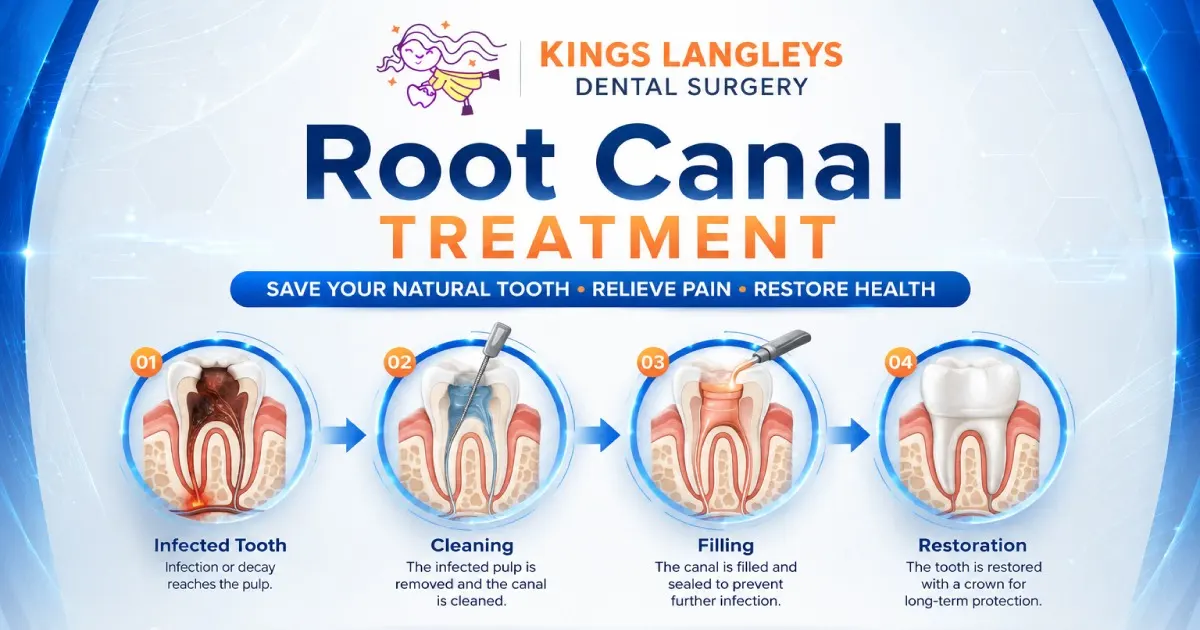
Root canal treatment treats infection or damage inside a tooth.
Each tooth has a soft centre called the pulp. This pulp contains nerves, blood vessels, and connective tissue. Deep tooth decay, cracks, injury, or repeated dental work can damage the pulp and allow bacteria to enter.
Once infection reaches this inner area, the tooth may become painful, sensitive, or swollen. Without treatment, the infection can spread and may lead to a dental abscess.
A root canal removes the damaged pulp, cleans the inside of the tooth, fills the canals, and seals the space. Your dentist may then restore the tooth with a crown or filling so it can work properly again.
The goal is clear: provide tooth infection treatment, reduce pain, and keep your natural tooth where possible.
Why Might You Need a Root Canal?
Your tooth will often show signs that something has gone wrong. Some symptoms feel strong straight away. Others start mildly and become worse over time.
You may need a root canal if you notice:
- Ongoing toothache
- Pain while biting or chewing
- Sensitivity to hot or cold that lingers
- Swollen or tender gums near one tooth
- A tooth that looks darker than the nearby teeth
- A small pimple-like bump on the gum
- A bad taste in your mouth
- Facial swelling in more serious cases
Pain may come and go, but that does not always mean the problem has settled. An infected tooth does not usually heal on its own. Early treatment gives your dentist a better chance of saving the tooth.
Can Gum Disease Cause Similar Symptoms?
Gum disease can also cause pain, swelling, bleeding, and tenderness around the teeth. These symptoms can feel similar to tooth infection symptoms, which is why a dental check matters.
Your dentist will examine your tooth, gums, and surrounding bone before recommending treatment. Sometimes the problem comes from the tooth pulp. Sometimes the gums need care. In some cases, both issues may need attention.
A proper diagnosis helps you avoid guessing and helps your dentist choose the right treatment.
What Happens During Root Canal Treatment?
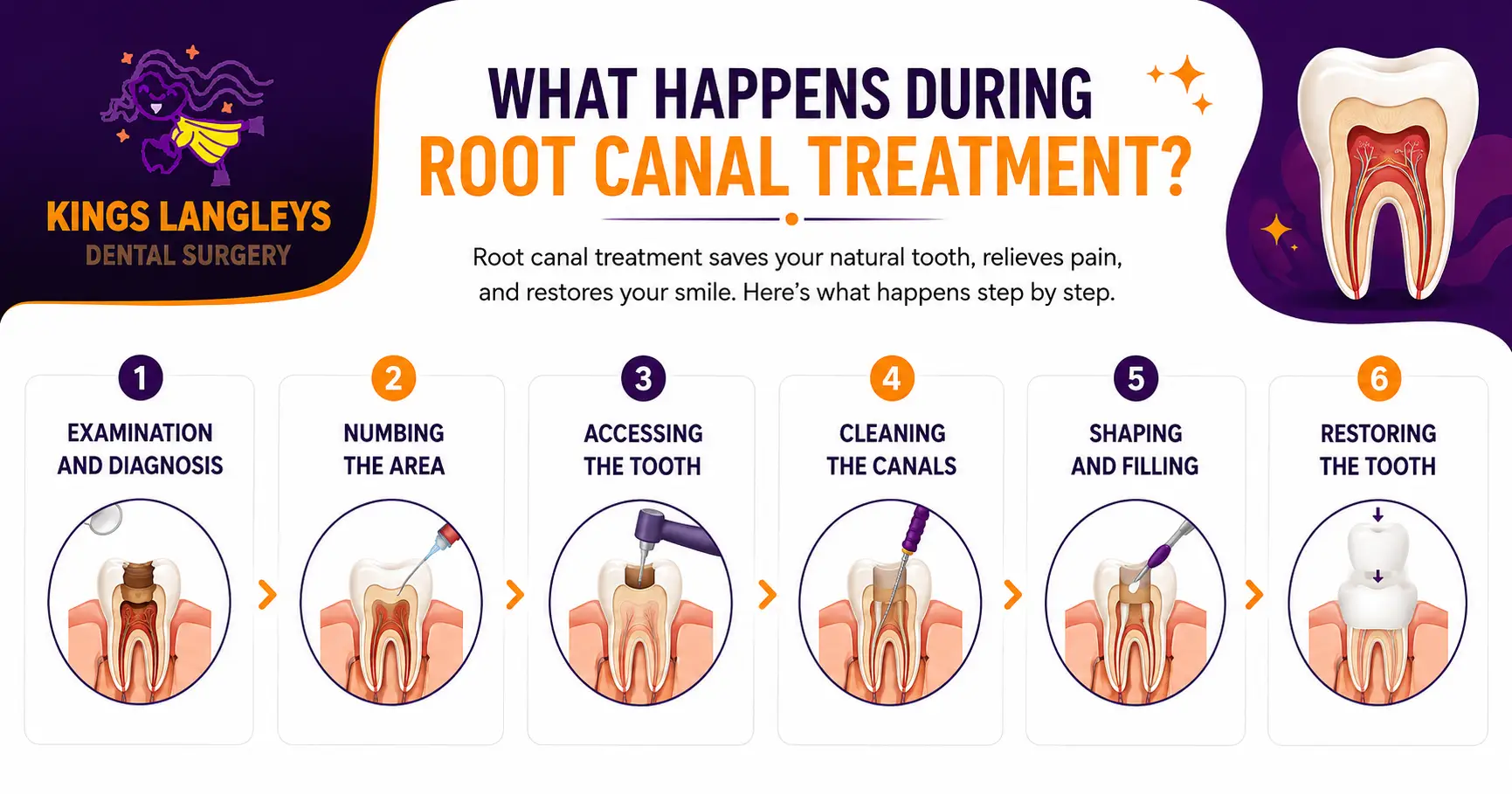
A root canal usually feels much more routine than people expect. Your dentist works carefully and uses a local anaesthetic to keep the area numb.
1. Examination and Diagnosis
Your dentist starts by checking the tooth and asking about your symptoms. They may take X-rays to see the roots, bone, and level of infection.
This step helps confirm whether a root canal suits your tooth or whether another treatment would work better.
2. Numbing the Area
Your dentist numbs the tooth and the surrounding gum before treatment starts. You stay awake, but the area should feel comfortable.
Dental anxiety feels common, especially for patients who have heard old stories about root canals. Tell your dentist early. A calm conversation can make the appointment much easier.
3. Accessing the Tooth
Your dentist creates a small opening in the tooth to reach the infected pulp. This opening allows them to clean the inside of the tooth properly.
The dentist removes only what they need to access and treat the infection. This helps preserve as much healthy tooth structure as possible.
4. Cleaning the Canals
The dentist removes the infected or damaged pulp. They then clean and disinfect the root canals to remove bacteria.
This step matters because bacteria can sit deep inside narrow spaces. Careful cleaning helps reduce the risk of reinfection and may help reduce inflammation around the affected area.
5. Shaping and Filling
Your dentist shapes the canals so they can fill them properly. The canals then receive a safe filling material that seals the space.
A strong seal helps protect the tooth from future bacteria.
6. Restoring the Tooth
After the root canal, your dentist restores the tooth with a filling or crown. Many back teeth need a crown because they handle strong chewing pressure.
A crown helps protect the treated tooth from cracks and gives it better strength for everyday use.
Does Root Canal Treatment Hurt?
Modern root canal care should not feel like the painful stories many people have heard.
The infection often causes pain before treatment. A root canal aims to remove that source of pain. With local anaesthetic, many patients describe the appointment as feeling similar to a longer filling.
You may feel mild soreness for a few days after treatment. This usually settles with simple care and pain relief, if your dentist recommends it.
Can Home Remedies Fix an Infected Tooth?
Home remedies may offer temporary relief, but they cannot remove the infection from inside a tooth.
Rinsing with warm salt water, using a cold compress, or taking suitable over-the-counter pain relief may help you feel more comfortable for a short time. These steps do not clean the root canals or treat the cause of the infection.
A dentist needs to assess the tooth. Without proper care, the infection can worsen and may increase the chance of needing the tooth extracted.
Benefits of Root Canal Treatment
Root canal treatment can protect both your comfort and your long-term dental health.
The key benefits include:
- Relief from tooth pain caused by infection
- A better chance of saving your natural tooth
- Less risk of infection spreading
- Protection for your bite and chewing function
- Fewer replacement treatments compared with extraction
- A natural look and feel once the tooth has been restored
Keeping your natural tooth can also help nearby teeth stay in place. This supports your bite and helps you chew comfortably.
Aftercare and Recovery
Most people return to normal daily activities soon after a root canal. Your treated tooth may feel tender for a short time, especially before your dentist places the final restoration.
To help your recovery:
- Avoid hard or crunchy foods for a few days
- Chew on the other side until your dentist restores the tooth fully
- Brush and floss gently
- Take pain relief only as directed
- Attend your follow-up appointment
- Contact the clinic if pain, swelling, or fever develops
Good daily care also matters. Brush your teeth twice a day, floss daily, and visit your dentist for regular check-ups. These habits help reduce plaque, tooth decay, gum disease, and future dental infections.
What Happens If You Delay Treatment?
A tooth infection can become more serious without care. Pain may increase, swelling may develop, and the infection may spread to nearby areas.
Delaying treatment may also reduce the chance of saving the tooth. In some cases, the tooth may need removal if the damage becomes too severe.
Early dental care usually gives you more options. It can also make treatment simpler and more comfortable.
Common Myths About Root Canals
Root canals have carried an unfair reputation for years. Many concerns come from outdated information.
“Root canals are painful”
The infection often causes the pain, not the treatment. Modern anaesthetic and dental techniques help make the procedure much more comfortable.
“It is better to remove the tooth”
Extraction may suit some situations, but saving your natural tooth often gives the best long-term result. Your dentist will explain your options clearly.
“A root canal means the tooth is fixed forever”
A treated tooth still needs care. Good brushing, flossing, check-ups, and a proper restoration help protect it for longer.
Root Canal Care at Kings Langleys Dental Surgery
Kings Langleys Dental Surgery has cared for local families since 1977. Our practice focuses on personalised care in a warm, relaxed environment.
We know that tooth pain can feel stressful. We also know that many patients feel nervous about dental procedures. Our team explains each step, works gently, and helps you make informed choices about your oral health.
You can expect clear advice, calm care, and support from a local dental team that values long-term patient relationships.
FAQs About Root Canal Treatment
How do I know whether I need root canal treatment?
A dentist can confirm this after an examination and X-rays. Common signs include ongoing toothache, lingering sensitivity, gum swelling, pain while chewing, or a darkened tooth. Early assessment gives your dentist a better chance of saving the tooth.
Can tooth decay lead to root canal treatment?
Yes. Deep tooth decay can reach the pulp inside a tooth and cause infection. A root canal may help save the tooth if enough healthy structure remains. Your dentist will assess the tooth before recommending the right treatment.
Can a dental abscess go away by itself?
A dental abscess needs professional care. Pain may ease for a short time, but the infection can remain and spread. A dentist can identify the cause and recommend treatment, which may include root canal care or another option.
How long does root canal treatment take?
Treatment time depends on the tooth and the level of infection. Some teeth need one visit. Others need two or more appointments. Back teeth often take longer because they can have more canals.
Can I eat after a root canal?
You can usually eat after the numbness wears off. Soft foods work best for the first few days. Avoid chewing on the treated tooth until your dentist places the final restoration.
Will I need a crown after root canal treatment?
Many root-treated teeth need a crown, especially molars and premolars. A crown helps protect the tooth from cracks and restores chewing strength. Your dentist will recommend the best option after checking your tooth.
What should I do if my tooth pain comes back?
Call your dentist for advice. Pain can return for several reasons, including bite pressure, inflammation, or a new infection. A dental check helps identify the cause and the right next step.
Need Help With Tooth Pain?
Tooth pain should not wait. Early care can ease discomfort, protect your oral health, and help save your natural tooth.
Kings Langleys Dental Surgery offers gentle dental care for patients in Kings Langley and nearby suburbs. Our team will assess your tooth, explain your options, and help you feel comfortable throughout your visit.
Call (02) 9674 1964 to book an appointment.