Somewhere between $6,000 and $10,000. That’s roughly what either option costs for a full course in Australia, and it’s usually the first thing people want to know before anything else.
Both get you to a straighter smile eventually. How you get there is where they split hard. Budget matters. So does how complicated your teeth are. So does whether you’ll actually wear something for 20 or more hours a day without cheating.
Invisalign vs braces in one line: Invisalign is clear, removable trays worn 20 to 22 hours a day, best for mild to moderate cases. Braces are fixed to your teeth and give more control when things get complicated. That’s the short version. The rest is below.
What’s Actually Different About Invisalign and Braces?
Braces are what most people picture first. Metal or ceramic brackets glued onto each tooth, a wire threaded through them, your dentist tightening it at each visit. That tightening is what actually shifts the teeth. They stay on for the whole run of treatment. No taking them off between visits, not even for a day.
Invisalign works differently. A series of clear plastic trays, custom-made for your teeth. You swap to the next one every one to two weeks or so, and each tray nudges things slightly further than the last. Because nothing’s glued down, the trays come out for eating, brushing and flossing.
Same basic job underneath it all: steady pressure until teeth move. The split is in how that pressure gets applied and how much of it people can actually see. Our Invisalign page and our braces page go into each one properly.
Invisalign vs Braces, Side by Side
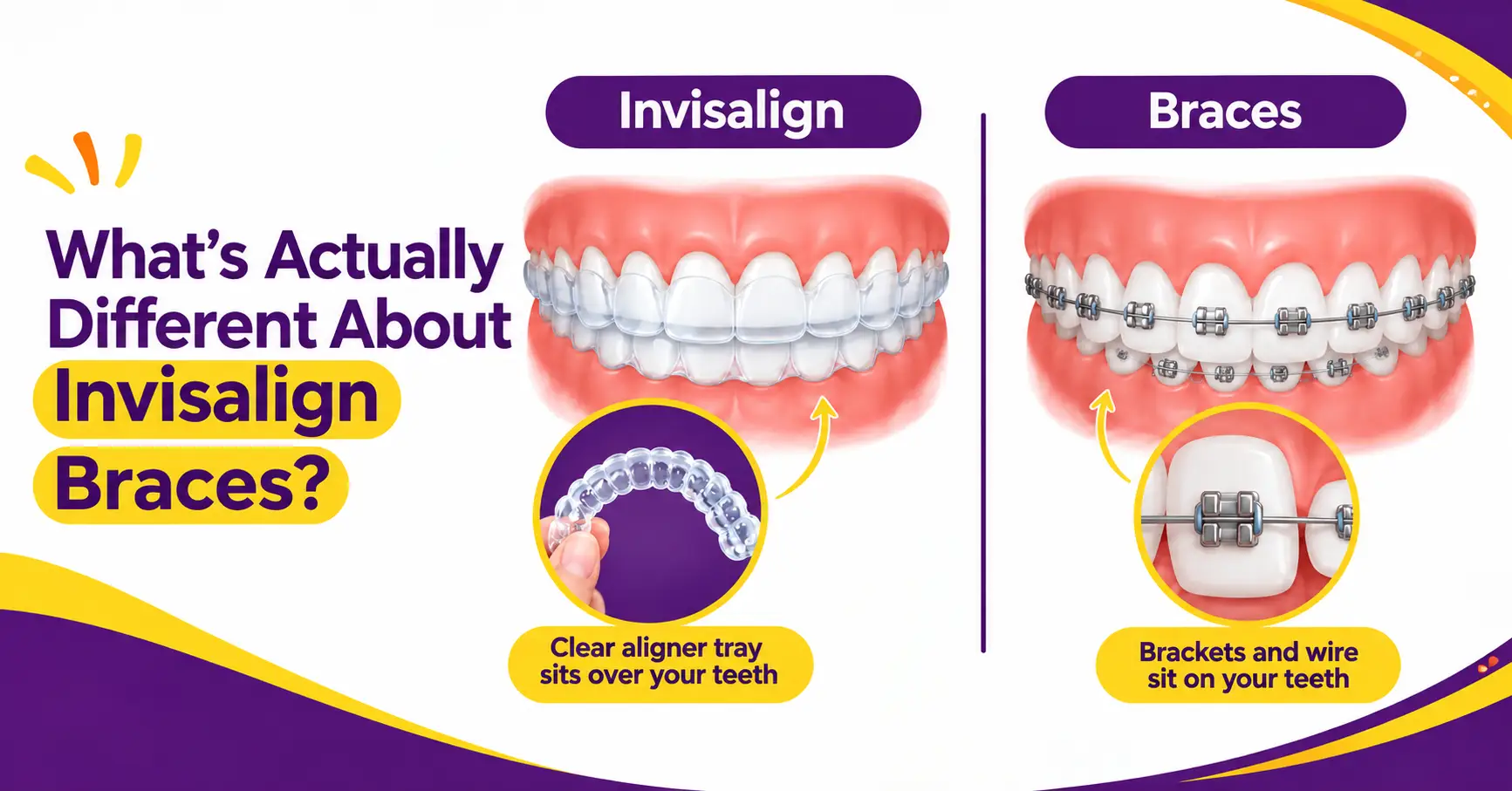
Clear aligners vs braces usually comes down to three things for most people: how it looks, how it feels, and how much effort it takes to keep up with.
| Factor | Invisalign | Braces |
|---|---|---|
| Appearance | Clear, barely noticeable | Visible metal or ceramic brackets |
| Comfort | Smooth plastic, fewer sore spots | Brackets and wires can rub the cheeks |
| Removable? | Yes, comes out for eating and cleaning | No, fixed until treatment finishes |
| Food restrictions | None. Trays come out to eat | Best to avoid sticky, hard or chewy foods |
| Cleaning | Normal brushing and flossing | Extra care needed around brackets and wires |
| Treatment time | Usually 12 to 18 months, simple cases from about 6 | Usually 18 to 24 months, sometimes longer |
| Best suited to | Mild to moderate crowding or spacing | Mild through to complex bite issues |
| What it asks of you | 20 to 22 hours a day, without fail | Not much. It’s just there |
Neither one wins outright. It comes down to your teeth, your bite, and whether you’re someone who’ll actually wear the trays as instructed.
Still not sure? Fair enough, most people aren’t at this point. A quick consultation usually sorts it out fast, and most patients walk out of that first chat already knowing which way they’re leaning. Kings Langleys Dental Surgery has been straightening smiles around Kings Langley for more than 46 years, and we can generally tell you within one visit which option fits your teeth and your budget. Book an appointment and we’ll talk you through it.
Is Invisalign as Good as Braces?
For mild to moderate cases, yes. It straightens teeth just as effectively as braces do. Braces pull ahead with complex bite or crowding problems, where a dentist needs finer control over how the teeth move. So the answer depends on your teeth, not on which option sounds nicer.
Braces, being fixed in place, apply force more consistently. That matters when the tooth movements involved are tricky. Orthodontics Australia, reviewed by the Australian Society of Orthodontists, says the same thing: treatment choice should come from an individual look at your teeth and bite, not preference alone.
Worth getting checked properly before deciding either way. Our orthodontics and Invisalign FAQs page covers a few more of the common questions about suitability and planning.
How Long Does Treatment Actually Take?
Invisalign runs 12 to 18 months on average. Orthodontics Australia notes simple cases can wrap up in as little as 6. Complicated ones take longer, as you’d expect.
Braces sit at 18 to 24 months, and complex cases can stretch past that too. One upside of braces: you can’t forget to wear them, since they’re fixed. That tends to make the timeline more predictable.
Your dentist can give you something closer to a real number once they’ve had a proper look at your teeth.
Is Invisalign More Expensive Than Braces?
Depends. On your case, mostly, and how long treatment runs. In Australia, a full course of either option generally lands between $6,000 and $10,000, sometimes more. Orthodontics Australia’s own figure for a full course of clear aligner treatment sits at roughly $6,500 to $9,500.
Invisalign can end up pricier than standard metal braces for complex cases. The range still swings a lot patient to patient though, so treat both numbers as a guide rather than a quote for your own mouth. Plenty of practices, ours included, offer payment plans to spread the cost. Our payment options page covers what’s on offer.
A consultation is the only way to get a real number. Cost comes down to your specific plan, not a general range.
Which One Fits Your Life?

Worth thinking about your own habits here, not just the treatment on paper.
Discreet, no food restrictions, happy to keep trays in most of the day. That’s the Invisalign type. And that last bit matters more than people think going in. Miss the 20 to 22 hours regularly and the treatment just takes longer, or stalls.
Complex case, don’t want to think about wearing anything, happier letting the dentist run the show with less input from you. Braces, probably.
Either way you’re in for regular check-ups. Your dentist tracks progress and makes adjustments as you go.
Can Adults Get Invisalign or Braces Too?
Yes. Plenty of adults go through both, and it’s not the awkward teenage-braces stereotype anymore. Invisalign in particular has taken off with adults, mostly because it’s discreet enough to wear through a normal work week without much comment from anyone. It’s now one of the more common orthodontic treatments among adults in Australia.
Age isn’t the deciding factor. The condition of your teeth, gums and bite is. Our team can check that during a consultation and point you toward whichever option actually suits what you’re trying to achieve.
So How Do You Actually Decide?
A proper consultation, mostly. Your dentist checks your teeth, gums and bite, then walks you through which option fits your case and what results you can realistically expect.
Ready for a clear answer? Book an appointment and we’ll go through your options together.
Frequently Asked Questions
Is Invisalign better than braces?
Not universally. Invisalign suits mild to moderate cases and gives you a more discreet, flexible option. Braces suit complex cases better, since they give your dentist more control over tricky tooth movements. An assessment will tell you which fits your teeth.
How long does Invisalign take compared to braces?
Invisalign typically runs 12 to 18 months, sometimes quicker for simple cases. Braces usually run 18 to 24 months. Both depend heavily on complexity, so your dentist can give you a more accurate estimate after a look.
Is Invisalign more expensive than braces?
Comes down to your treatment plan. In Australia, both generally fall between $6,000 and $10,000 for a full course, and Invisalign can cost a bit more for complex cases. A consultation gets you an actual number.
Can adults get braces instead of Invisalign?
Yes, age doesn’t rule out braces. Some adults choose braces for complex cases. Others lean toward Invisalign for how discreet it is. Your dentist can help you weigh the two against your teeth and your lifestyle.
Do I need to wear Invisalign trays all day?
Pretty much. 20 to 22 hours a day is what makes the treatment work. You can take them out for eating, brushing and flossing, but staying consistent with wear time is the actual key to finishing on schedule.
Which is better for complex teeth problems, Invisalign or braces?
Braces, generally. Fixed brackets apply more predictable force through difficult tooth movements, something clear aligners aren’t always as well suited to. Your dentist can confirm what’s right for your case at a check-up.