
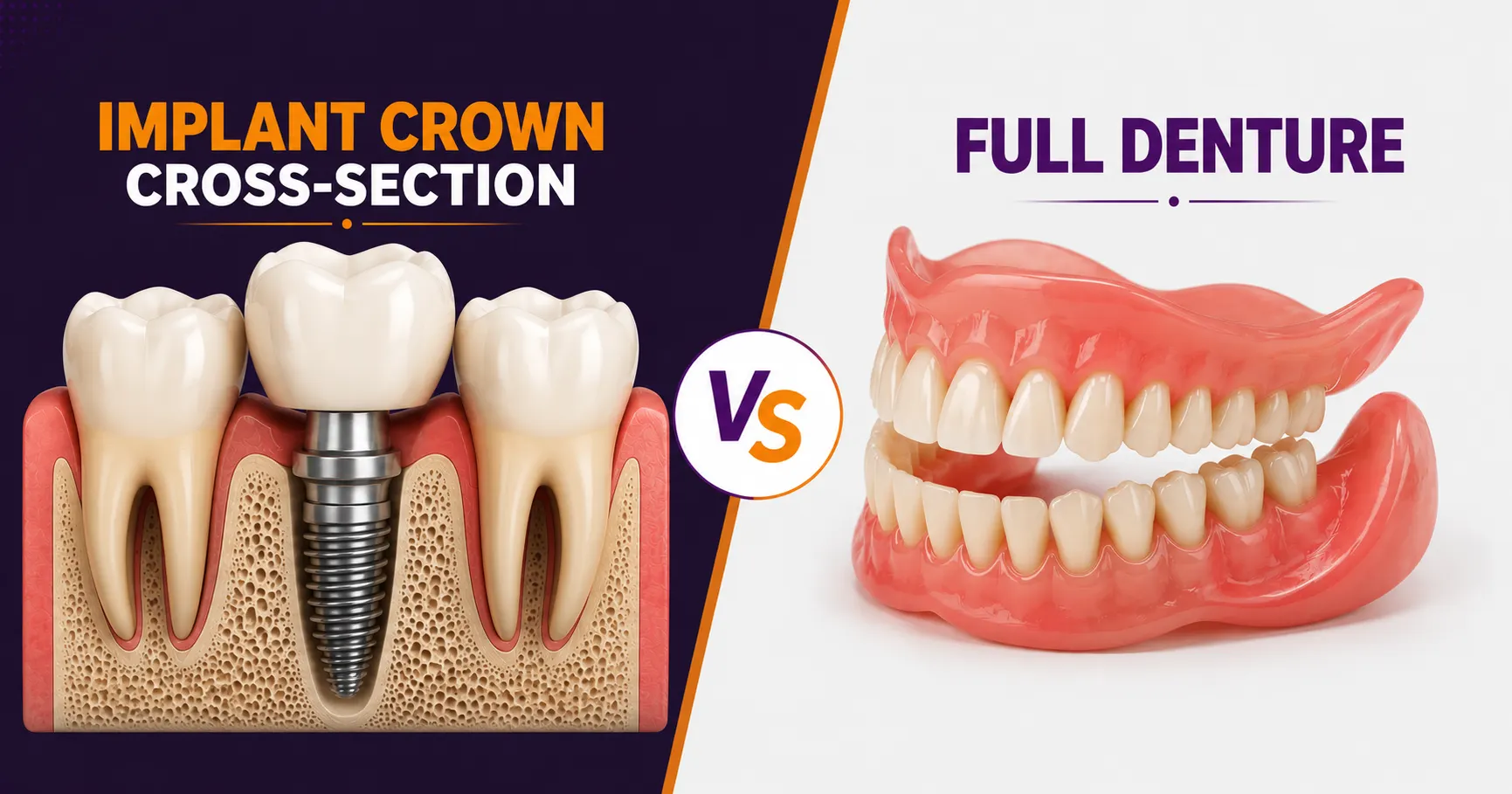
Tooth loss happens for many reasons. Decay, injury, or gum disease can all leave a gap. Whatever the cause, you’re left choosing between two main tooth replacement options: dental implants or dentures. Both can restore your smile. But they work in very different ways, and each has its own pros and cons.
A clear comparison of dental implants vs dentures, including the real cost of dental implants vs dentures in Australia, helps you make an informed decision with your dentist. You get to choose the option that fits your mouth, your budget, and your lifestyle, not just the one you’ve heard of first.
What Are Dental Implants?
A dental implant is a small titanium post. Your dentist places it into your jawbone during minor implant surgery, where it acts like a new tooth root. Once it heals, a crown goes on top. This crown looks and works like a real tooth.
Implant treatment can replace a single tooth, several teeth, or a full set of teeth through full mouth dental implants. Implants stay fixed in place. You don’t take them out at night, and because they don’t rely on neighbouring teeth for support, the rest of your natural teeth stay undisturbed.
Learn more about our dental implants process.
What Are Dentures?
Dentures are removable false teeth. They sit on top of your gums. Dentures come in two main types:
- Full dentures. Used when all teeth in an arch are missing.
- Partial dentures. Used when only some teeth are missing, often held in place with clasps that attach to neighbouring teeth.
A dental technician shapes dentures to match your mouth. You take them out to clean them and while you sleep.
See more about our dentures and partial dentures service.
Key Differences Between Implants and Dentures
1. How They Feel
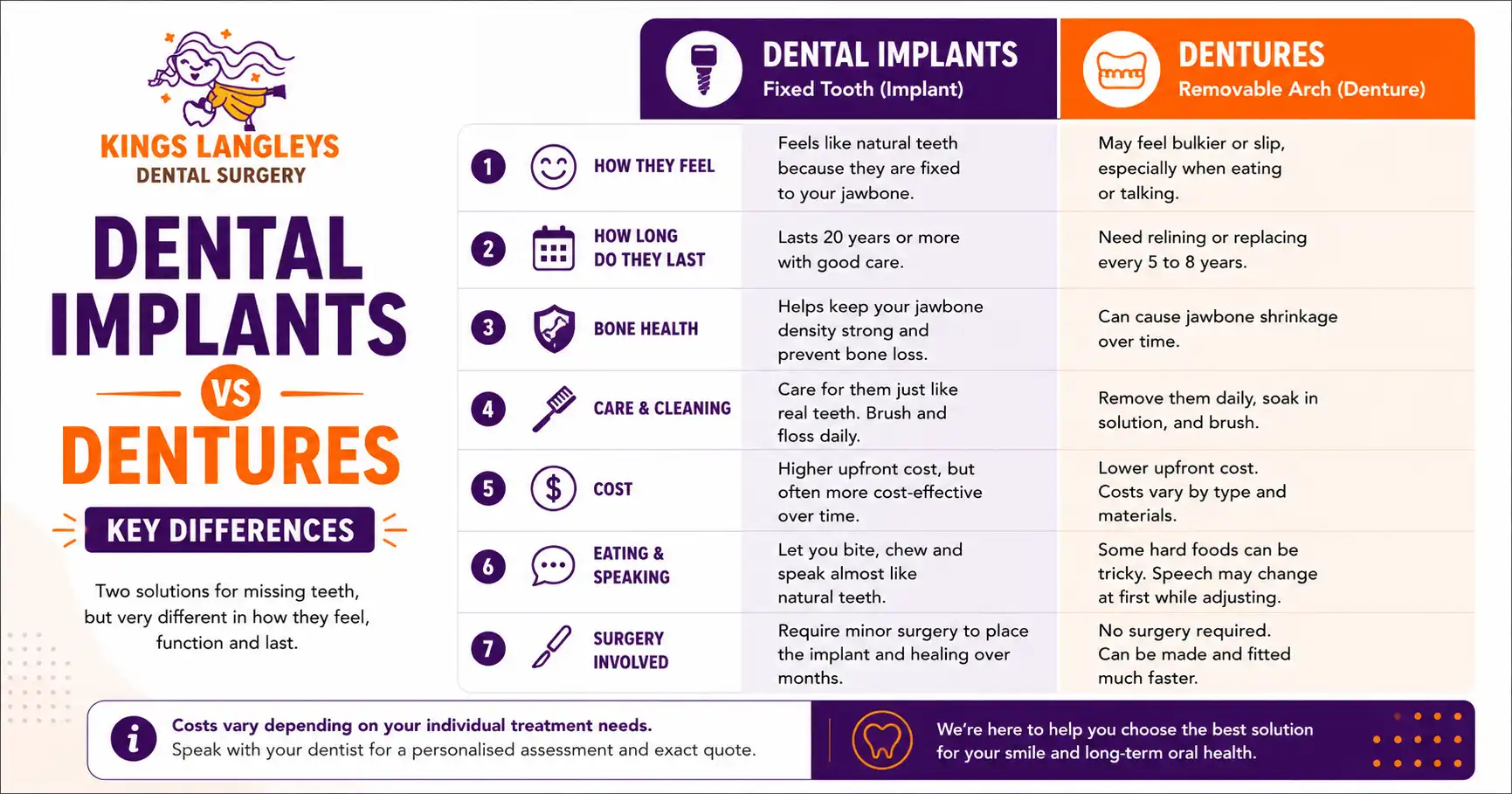
Implants feel like natural teeth because they sit fixed to your jawbone. Dentures can feel bulkier. Some people also find that dentures slip a little when eating or talking, especially in the first few months.
2. How Long Do They Last
Dental implants are one of the longer term solutions for tooth loss, often lasting 20 years or more with good care. Dentures usually need relining or replacing every 5 to 8 years, as your gums and jawbone change shape over time.
3. Bone Health
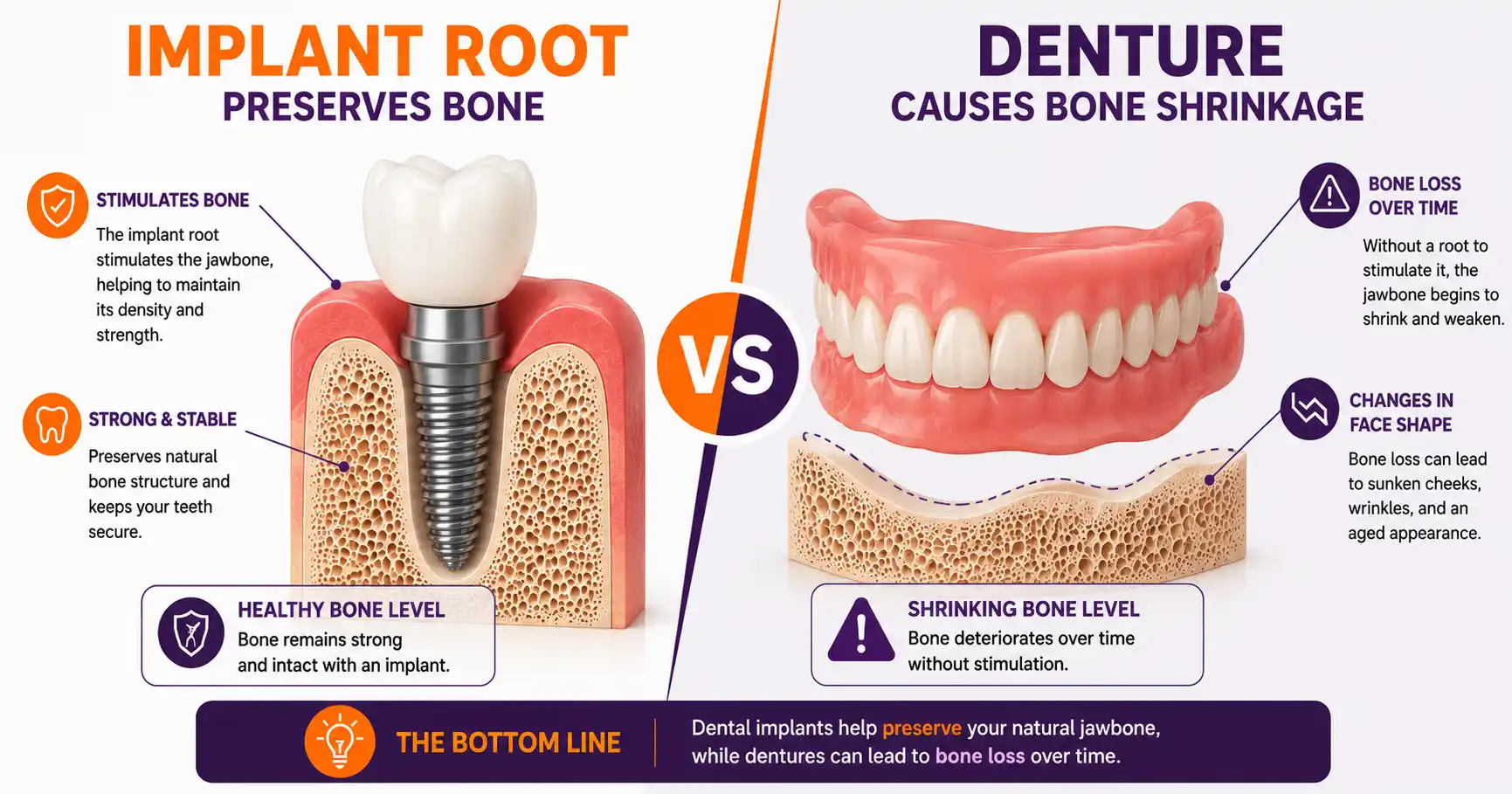
This one matters. Implants help keep your jawbone density strong because they act like a real tooth root and help prevent bone loss. Dentures sit on the gums only. Over time, the jawbone under dentures can shrink.
4. Care and Cleaning
You care for implants just like real teeth. Brush and floss them daily. Dentures need daily attention too. You remove them, soak them in a special solution, and brush them each day.
5. Cost
Dentures usually cost less upfront than implants. Implants cost more at first, but they often work out as a cost-effective choice over time because they don’t need replacing as often. Costs vary by clinic and by case. As a guide, a single implant with a crown typically runs from about $3,000 to $7,500 across Australia, while a full or partial denture ranges from roughly $900 to $4,000 depending on the type and materials. Your dentist can give you an exact quote as part of your overall treatment plan.
6. Eating and Speaking
Implants let you bite and chew almost like natural teeth. Some hard foods can be tricky with dentures, and some people notice a change in speech at first while they adjust.
7. Surgery Involved
Implants need minor surgery to place the post in the jawbone, followed by a healing period that often takes a few months while the implant fuses with the bone. Dentures need no surgery and can be made and fitted faster.
- Not sure which way to lean? Our expert dentist team at Kings Langleys Dental Surgery has cared for families in the area since 1977 and treated over 10,000 smiles. We can examine your teeth and gums, take a scan, and talk you through the option that suits your mouth and budget. Book an appointment to get a clear plan.
Quick Comparison Table
| Feature | Dental Implants | Dentures |
|---|---|---|
| Fixed or removable | Fixed | Removable |
| Feels like real teeth | Yes | Less natural |
| Protects jawbone | Yes | No |
| Average lifespan | 20+ years | 5–8 years |
| Upfront cost | Higher | Lower |
| Surgery needed | Yes | No |
| Daily care | Brush and floss | Remove and clean |
Who Should Choose Dental Implants?
Implants may suit you if you:
- Have enough healthy jawbone density, or can have a bone graft
- Want one of the more permanent solutions for a natural-feeling smile
- Are missing one tooth, several teeth, or all your teeth (with full mouth dental implants)
- Want to prevent bone loss and keep your jawbone strong
- Have had gum disease treated and now want a stable, long-term fix
Who Should Choose Dentures?
Dentures may suit you if you:
- Want a lower upfront cost
- Prefer to avoid surgery
- Have lost most or all of your teeth and want a faster fix
- Have health conditions that make surgery risky
Can You Combine Both?
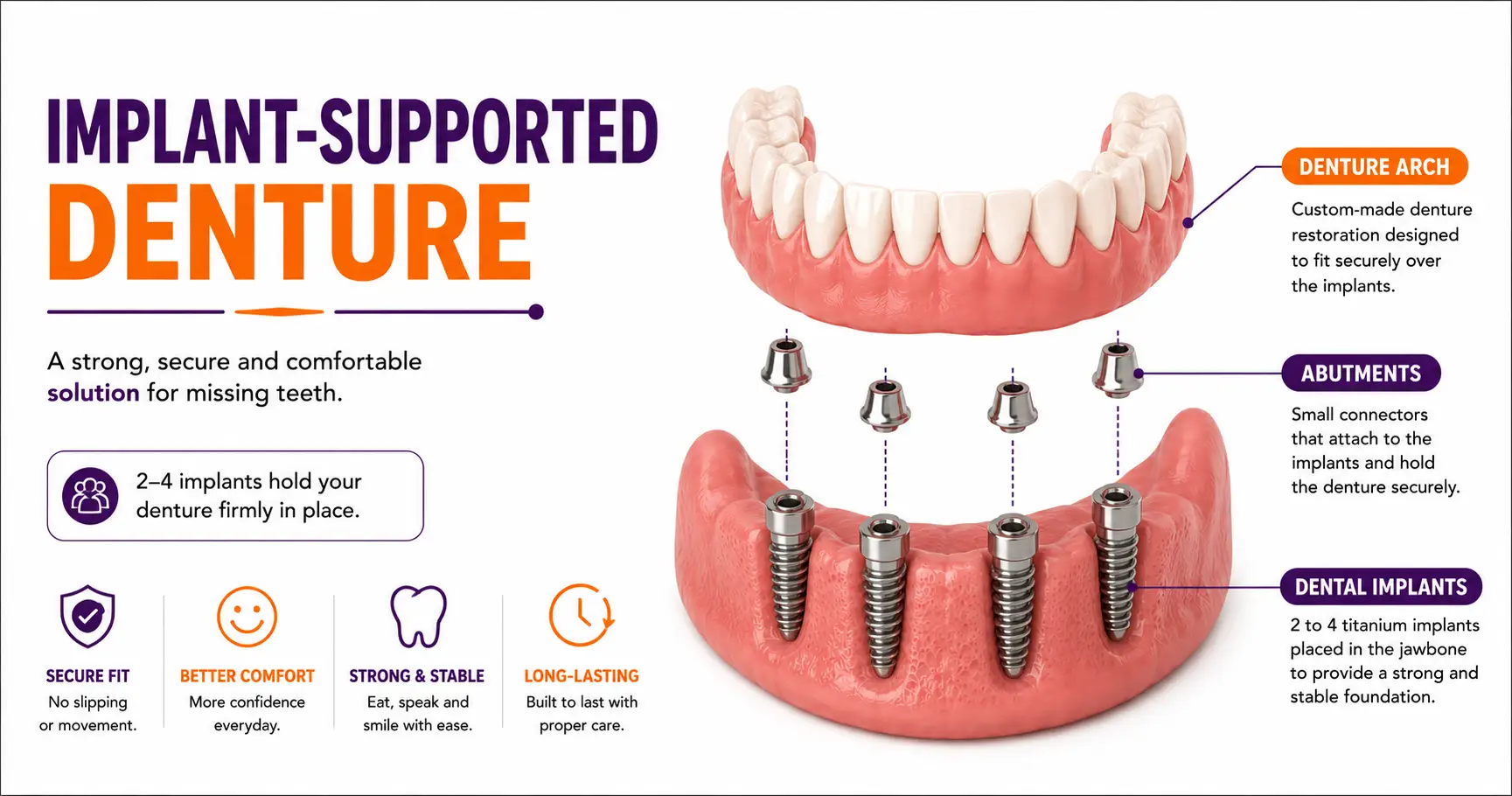
Yes. Many patients choose implant-supported dentures. This uses a small number of implants, often 2 to 4 in the lower jaw, to hold a denture firmly in place. It combines the stability of implants with the lower cost of dentures, a middle-ground option for people missing many teeth. It’s a good example of why which is better, implants or dentures, isn’t always an either/or answer.
The Best Way to Decide
No single answer fits everyone with dentures vs implants for missing teeth. The best choice depends on your jawbone density, budget, lifestyle, and how many teeth you’re missing. A dental check-up and scan can show which options will work best for your mouth, and your dentist can walk you through a treatment plan built around your situation.
The Australian Dental Association recommends regular dental visits and early treatment for tooth loss and gum disease, which help prevent further bone and gum problems. So it’s worth acting sooner rather than later.
Frequently Asked Questions
What’s the main difference between dental implants and dentures?
Dental implants are permanent, fixed teeth anchored into the jawbone. Dentures are removable false teeth that sit on the gums. Implants protect jawbone health and last longer, while dentures cost less upfront but need relining or replacing more often.
Are dental implants more expensive than dentures long-term?
Implants cost more at first. Over 10 to 20 years, they often work out cheaper because dentures need relines and replacements every 5 to 8 years. Your total cost depends on how many teeth you’re replacing and how well you care for them.
Can dentures cause bone loss in the jaw?
Dentures don’t cause bone loss, but they don’t prevent it either. They sit on the gum surface, so the jawbone underneath can slowly shrink after tooth loss. Implants act like a tooth root and help keep the bone stimulated.
What is an implant-supported denture?
An implant-supported denture uses a small number of implants, often 2 to 4, to hold a removable denture firmly in place. It costs less than a full set of implants but feels more stable than a standard denture. A solid middle-ground option.
How long do dental implants last compared to dentures?
With good care, dental implants often last 20 years or more. Conventional dentures usually need relining or replacing every 5 to 8 years as your gums and jawbone change shape over time.
Am I a candidate for dental implants if I’ve worn dentures for years?
Often, yes. Long-term denture wearers can still qualify for implants. Some lose jawbone over the years and may need a bone graft first. A scan and check-up will show whether your jaw can support implants.
To Conclude
Our team can check your teeth and gums, explain your options clearly, and help you choose between implants and dentures based on what suits your mouth and your budget. Book an appointment today, or learn more about our dental implants and dentures services.